By Oluwakemi Kindness
The Minister of Water Resources and Sanitation, Engr. Joseph Utsev, on Monday informed the House Committee on Water Resources that the Ministry has expanded key Water, Sanitation and Hygiene (WASH) programmes to 17 states across the country.
He also disclosed the completion of 5,238 public sanitation facilities and the establishment of new national water quality laboratories in Asaba and Umuahia while defending the Ministry’s proposed ₦98 billion budget for 2026.
The Minister made the presentation before the House Committee on Water Resources alongside Directors and senior officials of the Ministry as lawmakers reviewed the implementation of the 2025 budget and assessed priorities for the upcoming fiscal year.
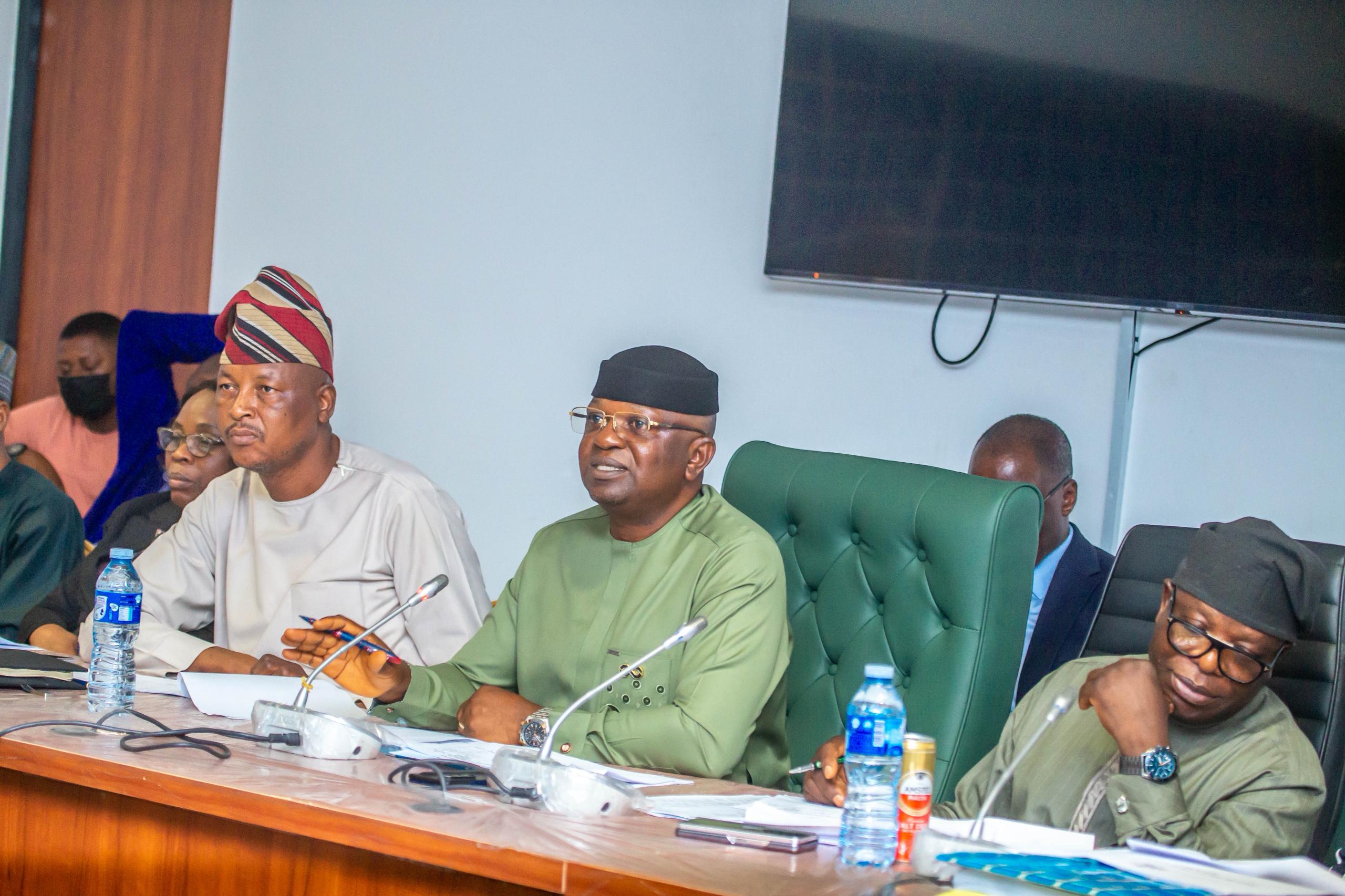
Members used the session to interrogate project execution, policy direction and transparency within the water resources sector.
WASH Expansion, Sanitation Infrastructure and Water Safety
Engr. Utsev said the Ministry is intensifying the rollout of its WASH programmes, including the Sustainable Urban and Rural Water, Sanitation and Hygiene (SURWASH) initiative and the Partnership for Expanded Water Supply, Sanitation and Hygiene (PEWASH).
He noted that 17 states are currently benefiting from these interventions aimed at expanding safe water access and strengthening sanitation delivery nationwide.
Although 5,238 sanitation facilities have been completed, lawmakers requested a detailed breakdown of their specific locations to enhance verification and strengthen oversight responsibilities.
The Minister further highlighted the completion of two national water quality reference laboratories in Asaba and Umuahia, describing them as essential for monitoring water safety, enforcing quality standards and improving compliance nationwide.
Dams, Irrigation and Food Security Dominate 2026 Budget Priorities
Presenting the Ministry’s proposed ₦98bn allocation, Engr. Utsev stated that the 2026 budget prioritises the completion of ongoing dam and irrigation projects designed to boost agricultural productivity and strengthen national food security.
He added that flood and drought mitigation remain central components of the Ministry’s work as the country continues to experience climate variability.
Among notable achievements, he cited:
• Completion of the Kashambila Dam, including a 40MW hydropower plant and an airstrip delivered through a PPP arrangement.
• Delivery of 2,000 hectares of irrigable land to farmers.
• Expansion of renewable energy-powered micro irrigation schemes across several states.
• Establishment of Water Users Associations nationwide to enhance sustainability and community ownership.
• Progress under the World Bank-supported SPIN sector reform initiative, which currently engages 26 states.
Lawmakers Raise Concerns Over 2025 Budget Performance
The session was presided over by Mukhtar Chawai, the Committee’s Deputy Chairman, who alongside other Members expressed concern over the slow implementation of the 2025 capital budget, especially delays in awarding outstanding projects.
In response, Engr. Utsev assured the Committee that all pending contracts would be awarded within the week, pledging improved execution going forward.
Committee to Conduct Nationwide Verification Visits
To strengthen oversight, the Committee resolved to embark on nationwide inspection visits to dam and irrigation project sites.
The exercise will enable lawmakers to independently verify project status, assess implementation progress and ensure public funds deliver value.
The substantive Committee Chairman, Sada Soli, attended the session as an ordinary member.