By: Julian Osamoto
Civil society leaders and democracy activists have warned that Nigeria’s democracy is failing to improve the lives of citizens despite 27 years of uninterrupted civilian rule.
The stakeholders raised the alarm during a Democracy Day dialogue and photo exhibition organised by the Nigeria Civil Society Situation Room in Abuja.
The event, themed “June 12: From Symbolism to System Change, The Role of Civil Society in Sustaining Nigeria’s Democracy,” brought together democracy advocates, labour leaders, development partners and civil society actors to assess Nigeria’s democratic journey since the annulled June 12, 1993 presidential election.
Participants said worsening poverty, unemployment, hunger and insecurity have continued to fuel public frustration and weaken confidence in democratic institutions.
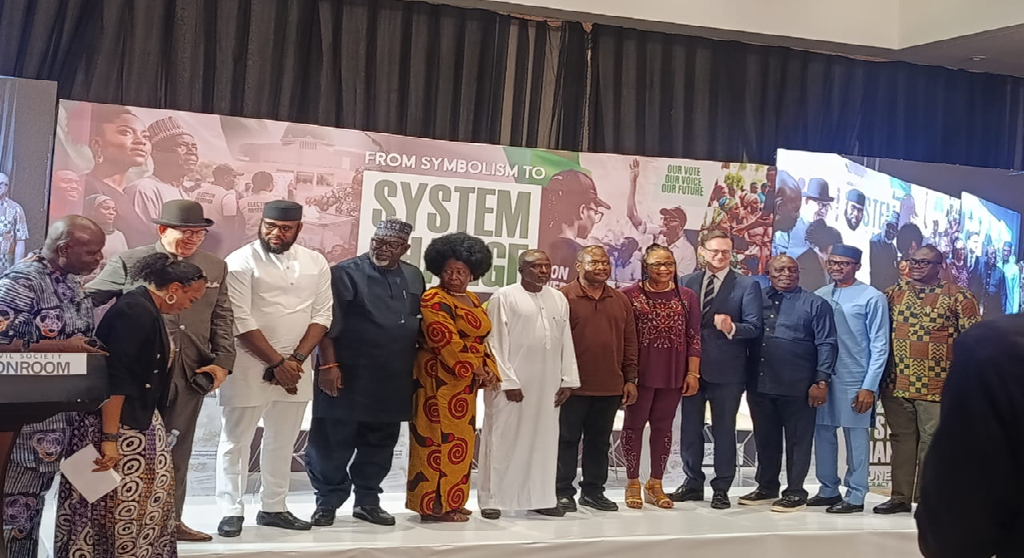
Convener of the dialogue, Yunusa Ya’u, acknowledged that the June 12 struggle ended military rule and restored civilian governance in 1999, but argued that many Nigerians have yet to experience the benefits of democracy.
He blamed growing impunity among public officials and weak accountability mechanisms for widening the gap between leaders and citizens.
“Civilian rule does not automatically translate into democratisation. We have witnessed increasing impunity, weak accountability and a growing disconnect between leaders and citizens,” Ya’u said.
He urged Nigerians to interrogate the state of democracy, strengthen civic engagement and demand greater accountability from public office holders.
Former House of Representatives member and democracy activist, Abdul Oroh, reflected on the sacrifices civil society groups, labour unions and pro-democracy campaigners made in resisting military rule and defending the June 12 mandate.
Oroh lamented that electoral shortcomings remain unresolved despite years of recommendations aimed at improving Nigeria’s electoral system.
Executive Director of the Centre for Development, Ene Obi, warned that Nigeria risks further democratic decline if citizens and civil society organisations fail to mobilise ahead of the 2027 general elections.
She said concerns over electoral integrity, insecurity and governance continue to threaten democratic progress, stressing that preparations for the next election cycle have already begun.
“What we need to do as civil society is not to remember what we did in the past. We should mobilise again across the country around various issues and create a major force to ensure that in 2027, we have a free and fair election,” Obi said.
She warned that flawed elections could undermine national security and further erode public trust in democratic institutions.
Obi also renewed calls for greater representation of women in governance and expressed concern over the slow progress of the Special Seats Bill aimed at increasing women’s participation in legislative institutions.
“Both men and women worked together in the struggle for democracy and should be there in representation,” she added.
Founder of TAF Africa, Jake Epelle, acknowledged progress in promoting electoral inclusion, particularly for persons with disabilities.
“One of the gains of our democratic journey is the growing entrenchment of inclusion in Nigeria’s electoral process,” Epelle said.
He, however, challenged stakeholders to move beyond symbolic commitments, arguing that persons with disabilities still face barriers to meaningful participation in elections.
“On election day, we still do not see the full realisation of inclusive participation and outcomes. We must move beyond rhetoric to action,” he said.
Situation Room Co-Convener, Mma Odi, said civil society, the media and organised labour played pivotal roles during the struggle for democracy but have gradually lost their collective strength.
“Civil society, the media and organised labour worked together during the struggle for democracy. Today, all three institutions have been weakened,” she said.
Odi also questioned the credibility and independence of institutions established to safeguard democratic governance.
“The electoral umpires of that era were respected for their integrity. Today, many of the institutions meant to safeguard democracy have been captured,” she added.
Also speaking, Situation Room Co-Convener, Celestine Odo, praised the role of the media during the pro-democracy era but expressed concern about its current state.
“The print media provided undiluted information during the struggle for democracy. Unfortunately, the media is not as resilient today as it was then,” Odo said.
In his goodwill message, British High Commissioner to Nigeria, Dr. Richard Montgomery, paid tribute to pro-democracy activists and acknowledged the challenges Nigeria has faced since returning to democratic rule.
“Anyone who knows about Nigeria’s democracy in the last 27 years will agree with how controversial and challenging it has been. It is good that civil society continues to provide a platform for people to speak,” he said.
Montgomery reaffirmed the United Kingdom’s support for democratic governance, noting that democracy remains the most effective system for enabling citizens to shape their future.
“We believe that democracy, despite its flaws, is the best system that enables people to shape their lives. For a huge, complex and diverse country like Nigeria, democracy is important for progress and development,” he said.
As part of the event, PLAC Executive Director, Clement Nwankwo, guided Montgomery and officials of the UK Foreign, Commonwealth and Development Office (FCDO) through an exhibition showcasing archived newspapers, photographs and historic moments from Nigeria’s pro-democracy struggle.
The stakeholders urged citizens to obtain their Permanent Voter Cards, participate actively in elections and hold public officials accountable. They warned that unless Nigeria addresses its governance and electoral challenges, the country could face deeper political instability and growing public disillusionment with democracy.