By Chinedu Echianu
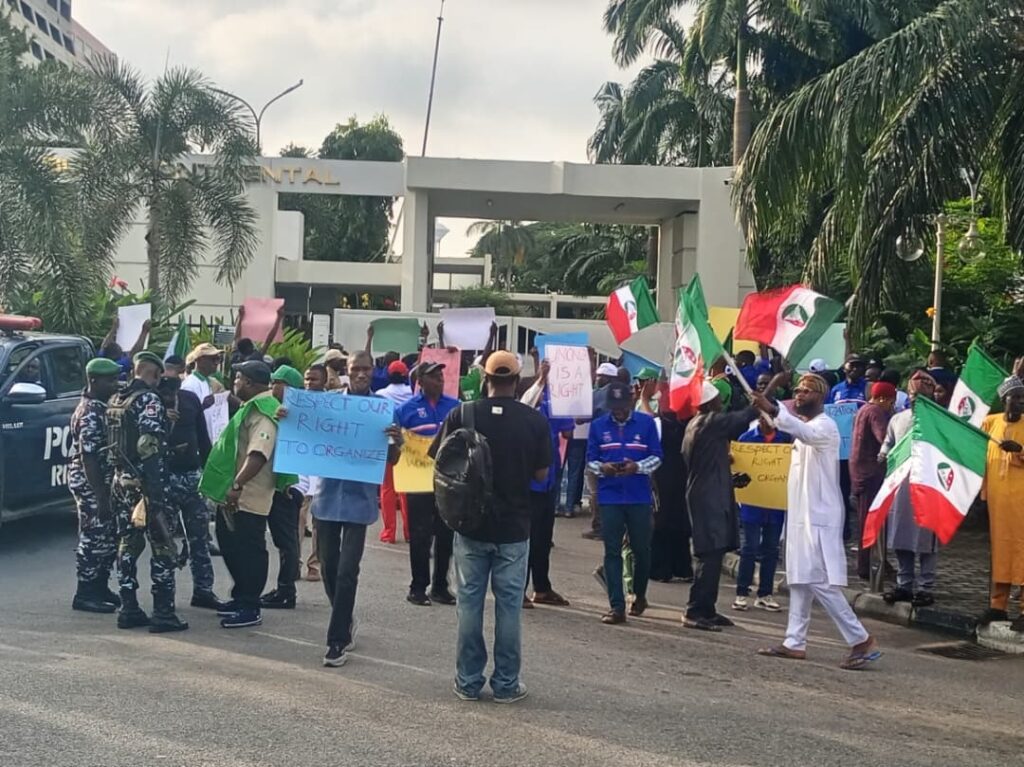
Fuel marketers under the umbrella of the Independent Petroleum Marketers Association of Nigeria (IPMAN) have threatened to shut down filling stations nationwide if the Federal Government attempts to impose price controls on petrol in the deregulated downstream sector.
The warning comes amid renewed concerns by the Federal Government and consumer protection authorities over the continued high cost of petrol despite a significant decline in global crude oil prices.
Speaking in an interview on Tuesday, IPMAN National Publicity Secretary, Chinedu Ukadike, insisted that marketers would resist any attempt to dictate pump prices, arguing that such a move would undermine the principles of deregulation.
“You can’t regulate a deregulated market. You can’t tell me how much to sell my product without first knowing how much I bought it. If they try to enforce price control, we will shut down our stations nationwide,” Ukadike said.
His remarks followed comments by the Minister of State for Petroleum Resources (Oil), Heineken Lokpobiri, who on Monday warned that the Federal Government would not tolerate profiteering or exploitative practices in the downstream petroleum sector.
Speaking at the opening of the 2026 General Counsel and Legal Advisers Forum organised by the Nigerian Midstream and Downstream Petroleum Regulatory Authority (NMDPRA) in Abuja, Lokpobiri stressed that although petrol pricing had been deregulated, government agencies still had a responsibility to protect consumers from exploitation.
He said market forces should determine fuel prices but maintained that regulators must ensure marketers do not engage in excessive profiteering.
“As part of the requirements of deregulation, prices have to be determined by market forces. However, government institutions, including the NMDPRA, have the responsibility to ensure there is no unnecessary profiteering,” the minister said.
The minister’s comments came against the backdrop of public complaints that refiners and fuel importers have failed to significantly reduce petrol prices despite crude oil prices dropping from about $120 per barrel during the recent US-Iran conflict to around $72 per barrel.
Similarly, the Federal Competition and Consumer Protection Commission (FCCPC) had on Sunday expressed concerns over what it described as possible consumer exploitation in the downstream petroleum sector, citing the slow response of pump prices to falling crude oil prices.
However, IPMAN dismissed allegations of profiteering, arguing that many independent marketers were instead incurring losses due to repeated price reductions by the Dangote Refinery.
Ukadike said marketers often purchase products at higher prices only for market prices to fall before the products reach their filling stations, leaving them to absorb the losses.
“We are losing money. We bought petrol at a particular rate, but before it got to our stations, the price had been reduced. We are struggling with financial losses and low patronage because those buying at lower prices can afford to sell cheaper,” he said.
He added that most marketers operate with bank loans, making it difficult to absorb sudden price cuts while still meeting loan repayment obligations.
According to him, the solution lies in promoting competition rather than introducing price controls.
“What we are asking for is not regulation or forcing marketers to sell below cost. Government should open up the market, encourage more importation, and ensure local refineries are operating. Greater competition will naturally bring prices down,” he stated.
Ukadike also urged the government to focus on reviving domestic refining capacity instead of monitoring filling stations for price compliance.
“The primary cause of the high fuel price is the lack of competition. Government should ensure local refineries are working. You cannot have a regulated market in a deregulated economy. The Petroleum Industry Act must be followed to the letter,” he said.