By Oluwakemi Kindness
When crude oil was discovered in commercial quantity in Oloibiri, present day Bayelsa State in 1956, it promised prosperity. It was expected to transform Nigeria into an economic powerhouse, create jobs, build infrastructure and improve the lives of millions.
Seventy years later, Nigeria has earned trillions of naira from oil, yet the Niger Delta, where the country’s petroleum wealth is gotten, remains a symbol of environmental devastation – polluted rivers, gas flaring, unemployment and broken promises.
Now, another natural resource is attracting global attention.
This time, it is not crude oil. It is lithium. Alongside cobalt, nickel, rare earth elements and other critical minerals, lithium has become one of the world’s most sought-after resource. It used in the production of batteries which power electric vehicles, smartphones, solar energy storage systems and other technologies driving the global transition to cleaner energy.
For Nigeria, the discovery of significant deposits of these minerals has sparked optimism.
For some experts, however, it has also raised an uncomfortable question: Is lithium becoming Nigeria’s new oil?

A New Global Race
Across the world, governments are scrambling to secure supplies of critical minerals needed for clean energy transition. They are investing billions of dollars in electric vehicles, renewable energy and battery manufacturing, pushing demand for lithium and other strategic minerals to record levels.
Nigeria has emerged as one of the countries in Africa with promising deposits, particularly in states such as Kaduna, Nasarawa, Kogi, Plateau, Ekiti and Cross River. The Federal Government sees the sector as a major opportunity to diversify the economy as the world gradually shifts away from fossil fuels.But beneath the excitement lies a deeper concern.
The Shadow of Oil
In his lecture at the 3rd Nigeria Socio-Ecological Alternatives Convergence in Abuja, Professor Omolade Adunbi of the University of Michigan warned that Nigeria could repeat the mistakes that turned oil into a source of conflict, pollution and inequality.
His message was simple but sobering: “Critical minerals may be the new oil, but they do not have to become the new curse.”
According to Adunbi, the danger lies not in the minerals themselves but in how they are governed.
If transparency is weak, environmental safeguards are ignored and communities are excluded from decision-making, lithium mining could follow the same trajectory as oil extraction in the Niger Delta.
Communities on the Frontline
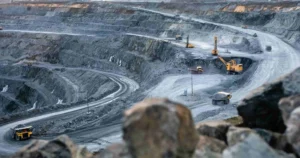
Unlike many people imagine, mineral deposits do not exist beneath empty land. They lie beneath forests, farms, rivers, grazing routes and ancestral communities.
For families who depend on those lands for farming, fishing and cultural identity, mining can bring profound change.
Roads are built.
Forests are cleared.
Land is acquired.
Communities are relocated.
Livelihoods are disrupted.
Adunbi argues that if these communities are not protected, they could become the next “sacrificial zones” in the global race for clean energy.
Can Clean Energy Come at a Dirty Cost?
One of the most striking arguments at the conference is that clean energy is not automatically clean for everyone. Electric vehicles may reduce carbon emissions.
Solar panels may help combat climate change.
Wind turbines may produce renewable electricity.
But all depend on minerals extracted from the earth.
The professor warns that forests can be destroyed, rivers polluted and communities displaced in the process of producing technologies intended to protect the environment. In other words, a low-carbon future should not come at the expense of vulnerable people.
Beyond Economics
The implications go beyond the environment. Illegal mining has increasingly become linked with insecurity in several parts of Nigeria. Security agencies have repeatedly cracked down on illegal mining operations involving local and foreign actors, while experts warn that criminal networks are exploiting weak regulation to profit from the booming trade in critical minerals. Adunbi argues that resource governance is now as much a security issue as it is an economic one.
Choosing a Different Path
Despite the warnings, the professor insists Nigeria still has an opportunity to get it right.
He proposes a “Just Minerals Strategy” built on transparency, environmental protection and community participation.
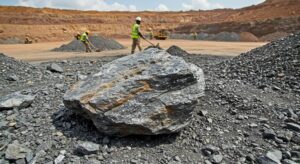
Among his recommendations are legally enforceable community consent before mining begins, protection for forests and sensitive ecosystems, local processing of minerals to create jobs, public disclosure of mining licences and stronger environmental restoration after extraction.
The goal, he says, is to ensure that Nigeria benefits not only from mineral exports but also from industrial development, employment and sustainable growth.
History has shown that oil transformed the country’s economy but also exposed the costs of weak governance, environmental neglect and unequal development.
As global demand for lithium and other critical minerals grows, Nigeria finds itself at another crossroads. Will the country simply replace one extractive economy with another? Or will it build a mineral industry that protects communities, creates value at home and avoids the mistakes of the past? Perhaps the most enduring message from Adunbi’s lecture is that the real challenge is not whether Nigeria should mine its critical minerals. It is whether the country can do so differently.
As he put it: “The real transition is not simply from oil to minerals. It is from extraction to restoration.”
That may well determine whether lithium becomes Nigeria’s next blessing or its next curse.