By Sofiat Adenekan-Abdul
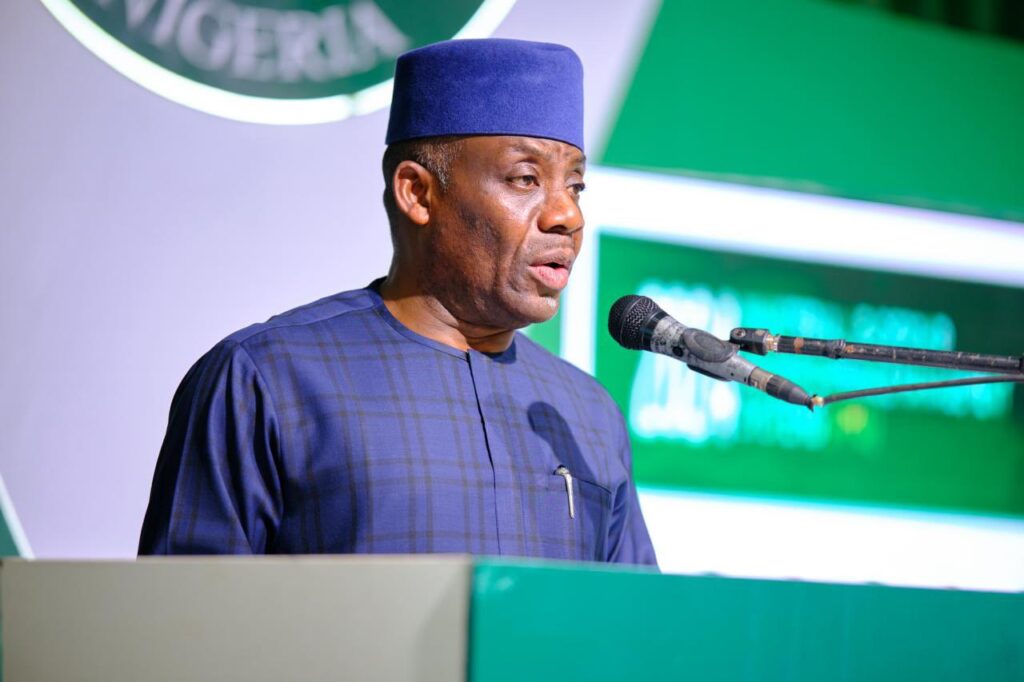
The Director-General of the National Institute for Legislative and Democratic Studies (NILDS) Prof. Abubakar Suleiman has urged interns of the institute to deepen their understanding of democracy, governance and legislative processes as part of efforts to strengthen Nigeria’s democratic institutions.
The DG gave the charge on Thursday in Abuja during a lecture on democracy and governance for the interns, highlighting the critical role of the legislature in sustaining democratic governance.
He described the legislature as the most representative arm of government, noting that it reflects Nigeria’s diversity through the representation of different ethnic, religious and geopolitical interests.
Prof. Suleiman explained that NILDS was established to bridge gaps in parliamentary knowledge and strengthen the capacity of lawmakers and legislative staff through training, research and technical support.
According to him, the Institute has expanded its mandate beyond the National Assembly to include state assemblies, political parties, civil society organisations and other democratic institutions.
The former minister added that, NILDS now offers specialised academic programmes in areas such as parliamentary studies, legal drafting, party politics and official reporting, while also providing research and technical assistance to lawmakers.
Others he highlighted are the establishment of the Centre for Security Analysis, Democracy Radio and the Gender Inclusivity Unit as part of efforts to broaden the Institute’s contribution to national development.
The DG urged the interns to take advantage of their time at NILDS, stressing that building a strong democracy requires knowledgeable citizens, effective institutions and inclusive participation.
Democracy and Governance
The Acting Director of Democracy and Governance Dr. Christopher Ngara at NILDS, in his presentation, explained the distinction between parliament and legislature, noting that the terms are often used interchangeably but have different technical meanings depending on the system of government.
Ngara said Nigeria operates a presidential system in which the legislature, executive and judiciary function as separate arms of government under the principle of separation of powers.
He identified lawmaking, representation and oversight as key functions of the legislature, stressing that parliament plays a critical role in promoting democracy and good governance.
The Ag. Director also explained that democracy gives citizens the opportunity to participate in decision-making by electing representatives to act on their behalf.
Ngara urged the interns to understand the principles and processes of democratic governance, noting that effective representation, accountability, checks and balances, and respect for the rule of law are essential to a functioning democracy.