By Oluwakemi Kindness
The Director-General of the Budget Office of the Federation, Tanimu Yakubu, has told the House of Representatives Ad Hoc Committee investigating the Presidential Economic Advisory Council/Presidential Foreign Intervention Promotion Council (PEAC/PFIPC) that although the National Assembly appropriated ₦1.302 billion for the council in the 2026 budget, none of the money was released or spent.
Appearing before the committee on Friday, Yakubu said the appropriation remained a legal provision because the statutory conditions required for expenditure were never met.
“Appropriation is authority in law to make provision for an expenditure. It is not a cheque. It is not a warrant. It is not cash released from the Treasury,” he said.
Yakubu explained that public funds can only be be spent after a chain of approvals involving several government institutions.
According to him, the Office of the Head of the Civil Service of the Federation approves establishment and recruitment, the National Salaries, Incomes and Wages Commission regulates remuneration, while the Budget Office assesses the fiscal implications and issues Financial Clearance when all conditions have been met.
He added that the Federal Ministry of Finance and the Office of the Accountant-General of the Federation are responsible for warrants, cash backing and payments, while procurement authorities oversee capital expenditure.
“No single office can carry an appropriation from the statute book into a bank account. In the case of PEAC/PFIPC, the chain never opened,” Yakubu said.
Budget Office defended its role
Yakubu told lawmakers that the Budget Office neither created the council nor assigned its budget code or approved its establishment.
Instead, he said the office acted on official government instruments issued by the relevant authorities and only calculated the fiscal implications.
He disclosed that although the council requested ₦3.85 billion for personnel costs, the Budget Office rejected the figure and carried out an independent assessment.
Using the approved establishment, recruitment waiver and public service salary structure, the office arrived at ₦802.98 million, which was included in the Executive Budget and later appropriated.
“The Budget Office disregarded the unsupported estimate and made its own calculation,” he said.
No financial clearance, no salaries
Yakubu said the Budget Office never issued Financial Clearance because the required conditions remained incomplete.
He explained that after the Appropriation Act received presidential assent on March 31, 2026, the National Salaries, Incomes and Wages Commission had yet to confirm the proposed staffing and remuneration arrangements.
As a result, no lawful recruitment took place.
“There was no Financial Clearance. There was no lawful recruitment. There was no payroll enrolment. There was no salary payment,” Yakubu told the committee.
He stressed that the ₦802.98 million personnel provision never became payroll expenditure.
“Not one kobo of the personnel provision could lawfully have been drawn, and not one kobo was drawn,” he added.
Yakubu also said the council’s ₦200 million overhead provision never became a cash entitlement because Treasury warrants and cash backing were never issued.
He disclosed that after questions arose over the council’s legal status in June 2026, the Budget Office formally asked the Federal Ministry of Finance and the Office of the Accountant-General of the Federation to withhold all payment instruments.
“That instruction closed the remaining route to an overhead release,” he said.
The Budget Office boss added that the council’s ₦300 million capital provision never progressed to procurement.
According to him, no procurement plan was approved, no Ministerial Tenders Board considered any transaction, no Certificate of No Objection was issued by the Bureau of Public Procurement, and no Treasury release followed.
Yakubu maintained that the safeguards built into Nigeria’s public finance system prevented any unlawful expenditure.
“The controls did not discover a loss after the event. They prevented the event. They did not chase money after it had gone. They kept it from moving,” he said.
He concluded that the Budget Office would continue to cooperate with the House committee by providing records, computations and official correspondence to support its position.
“The money never moved because the controls held,” Yakubu said.
Committee shifts focus to Accountant-General
During the hearing, lawmakers questioned whether the Budget Office should have raised concerns after receiving correspondence from the council requesting personnel cost estimates.
Responding, Yakubu said the Budget Office does not rely on requests from agencies when determining personnel costs.
Instead, he said the office calculates personnel costs using approved establishment structures, recruitment waivers and salary frameworks issued by the Office of the Head of the Civil Service of the Federation and the National Salaries, Incomes and Wages Commission.
“We do not rely on any instrument to calculate personnel costs. We simply determine the fiscal effect based on the authorised establishment, salary grade levels, allowances and other entitlements,” he said.
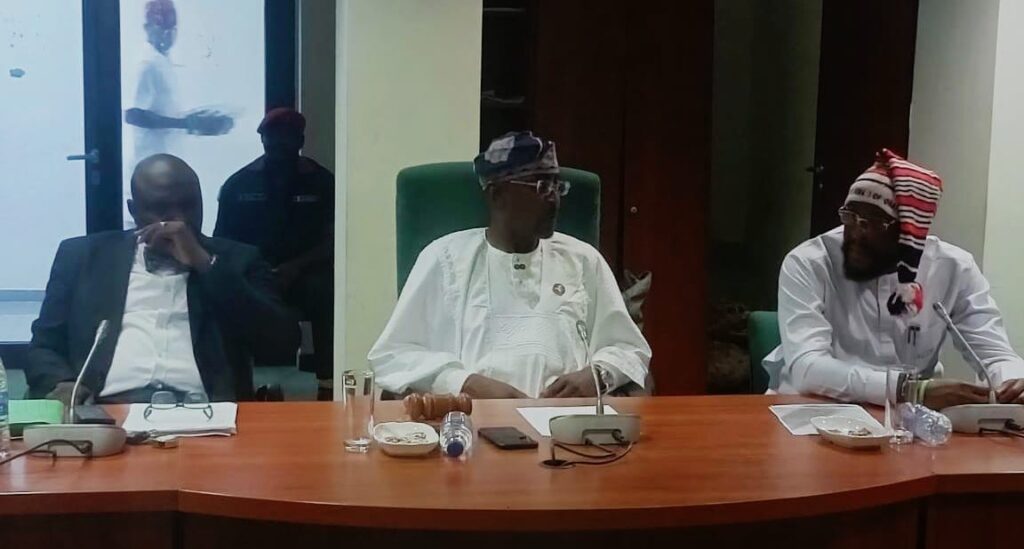
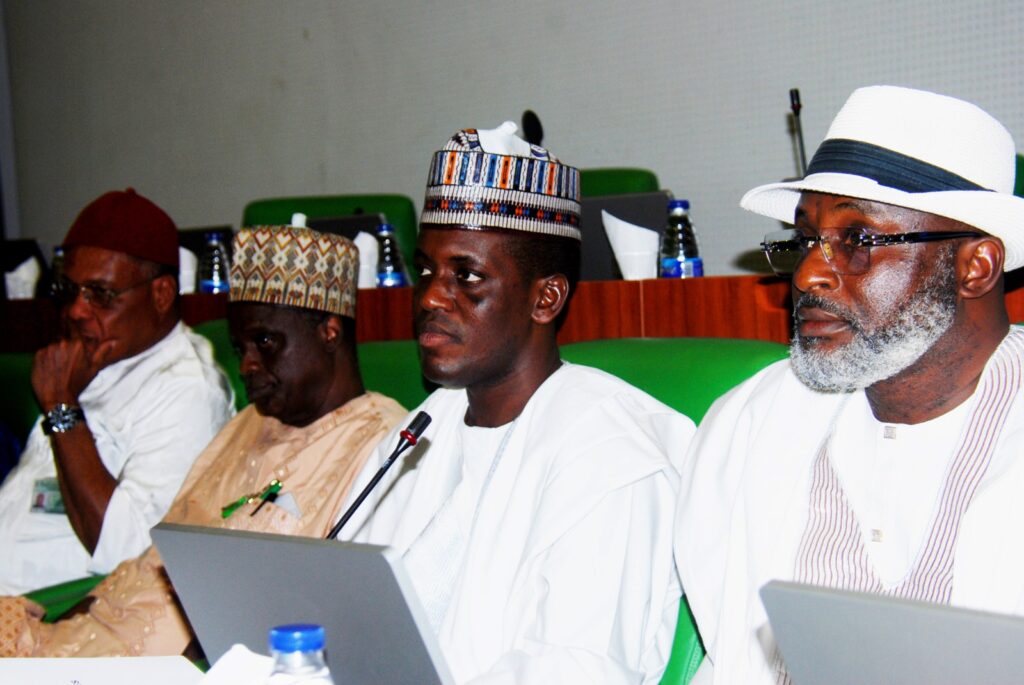
Chairman of the Ad Hoc Committee, Rep. Yusuf Gagdi, said the evidence before the panel showed that the Budget Office acted on approvals and official documents issued by other government agencies.
He noted that the Office of the Head of the Civil Service had informed the committee that some of the documents it acted upon were later discovered to have been forged.
Gagdi said the committee would now turn its attention to the Office of the Accountant-General of the Federation to explain how the council obtained a budget code.
“The Accountant-General should appear before this committee and explain how the budget code was created,” Gagdi said.
He added that the committee would continue hearing from relevant agencies before determining where responsibility lies in the matter.