By Chinedu Echianu
Stakeholders at the National Institute for Legislative and Democratic Studies (NILDS) have called on the National Assembly to amend the Electoral Act to impose stiffer sanctions, including the disqualification of political parties, where candidates are imposed under the guise of consensus rather than emerging through transparent and democratic party primaries.
The call was made on Tuesday during the 5th Democracy and Governance Public Lecture Series organised by the Department of Democracy and Governance of NILDS in Abuja.
The lecture, titled “Influence of Caucus on Internal Democracy in Nigeria: Insights from APC and PDP Party Primaries,” examined the growing dominance of party caucuses in the candidate selection process and its implications for Nigeria’s democratic development.
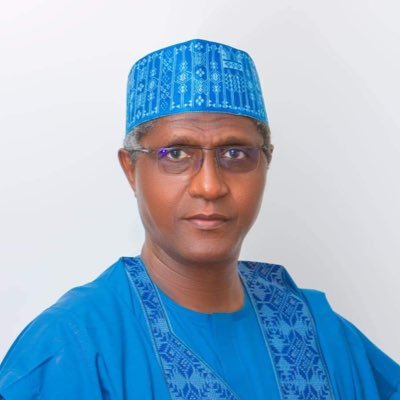
Delivering the keynote lecture, Professor of Political Science at the University of Abuja, James Nda Jacob, argued that internal democracy in Nigeria’s major political parties has been systematically weakened by powerful caucuses comprising governors, former office holders, party financiers and political godfathers.
According to him, rather than allowing party members to determine candidates through open and competitive primaries, these influential groups frequently impose preferred aspirants, undermining the principles of inclusiveness, transparency and accountability.
Jacob said the increasing reliance on consensus arrangements has become a tool for excluding genuine competition within political parties.
He called on the National Assembly to review the Electoral Act to prescribe severe penalties for political parties that violate internal democratic processes by imposing candidates under the pretext of consensus.
According to him, such sanctions should include the outright disqualification of political parties from fielding candidates where due process is not followed.
The political scientist maintained that although caucuses can play legitimate roles in conflict resolution, consultation and consensus building, they have evolved into informal centres of power that routinely override party constitutions and established procedures.
He argued that candidates produced through imposition often owe their loyalty to the political elites who sponsored them rather than to the electorate, resulting in poor governance and weak public accountability.
Jacob further noted that the pattern has remained largely unchanged from the era of the People’s Democratic Party (PDP) dominance to the current administration under the All-Progressives Congress (APC), with caucus politics continuing to shape candidate selection in both parties.
He warned that when party primaries are manipulated, general elections merely become an endorsement of decisions already taken by a few influential individuals.
Earlier, Director of the Department of Democracy and Governance at NILDS, Dr. Chris Ngara, said political parties remain the foundation of every democratic system and must be strengthened to consolidate democracy.
Ngara expressed concern that internal democracy within political parties has continued to deteriorate, stressing that the public lecture was organised to stimulate informed discussions on restoring transparency and accountability in party politics.
Also speaking, the Director-General of NILDS, Prof. Abubakar Sulaiman, represented by the Director of the Legislative Centre for Security Analysis, Prof. Zubairu Dagona, described the topic as timely and fundamental to Nigeria’s democratic growth.
He noted that while elections remain the hallmark of democracy, the processes through which political parties nominate candidates ultimately determine the quality of governance citizens receive.
The NILDS DG stressed that transparent, inclusive and rules-based internal party processes would strengthen public confidence in democratic institutions, produce more credible elections and promote responsive governance.
Participants at the lecture agreed that strengthening internal democracy within political parties is essential to improving Nigeria’s electoral process and deepening democratic governance.