By Oluwakemi Kindness
The Central Bank of Nigeria (CBN) says the country’s economy remains resilient despite mounting global uncertainties.
Governor of the Central Bank of Nigeria (CBN), Olayemi Cardoso, who srated this on Tuesday after the Monetary Policy Committee (MPC) meeting in Abuja, attributed the performance to reforms implemented by both the fiscal and monetary authorities.
Addressing journalists on Tuesday after the committee’s 306th meeting, Cardoso said the economy has continued to withstand external shocks, reflecting the impact of reforms implemented by both the fiscal and monetary authorities.
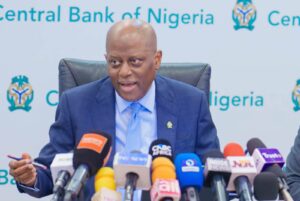
“Available evidence suggests that the Nigerian economy has remained largely resilient to the external shocks, reflecting the gains from prior reforms implemented by the fiscal and monetary authorities,” he said.
Cardoso said the MPC noted that renewed hostilities in the Middle East had heightened global uncertainty, particularly through rising energy prices and their potential impact on domestic inflation.
Despite the external risks, he said the committee believed maintaining the current monetary policy stance would allow the CBN to monitor incoming economic data and respond appropriately if necessary.
According to him, as a result, the MPC retained the Monetary Policy Rate (MPR) at 26.5 per cent.
It also left the Standing Facilities Corridor at +50/-450 basis points, while retaining the Cash Reserve Ratio (CRR) at 45 per cent for Deposit Money Banks, 16 per cent for Merchant Banks and 75 per cent for non-TSA public sector deposits.
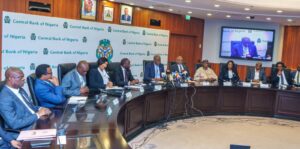
Cardoso said the committee also acknowledged improved collaboration between the Federal Government and the CBN.
“Members noted that greater alignment between fiscal and monetary policies would enhance policy effectiveness and support the achievement of overall macroeconomic objectives,” he said.
On inflation, the CBN governor said headline inflation eased slightly to 15.91 per cent in June from 15.93 per cent in May, ending three consecutive months of increases.
He said the MPC expects inflation to continue moderating in the medium term, supported by exchange rate stability, the delayed impact of previous monetary tightening and improved food supply as the harvest season approaches.
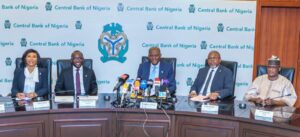
Cardoso also said the committee welcomed the positive outcome of the banking sector recapitalisation exercise, noting that it had strengthened the resilience of the financial system.
“The Committee welcomed the positive outcome of the banking sector recapitalisation exercise, noting the improvement in the resilience of the banking system,” he said.
He added that Nigeria’s external reserves rose to $52.52 billion as of July 17, 2026, enough to finance about 11 months of imports, while the Purchasing Managers’ Index (PMI) improved to 50.1 points in June, signalling a return to business expansion.
Looking ahead, Cardoso said the MPC expects economic growth to remain resilient in 2026, driven by improving crude oil production, stronger business activity and ongoing reforms.
However, he warned that a prolonged escalation of the Middle East conflict remains the biggest threat to Nigeria’s inflation and growth outlook.
“The Committee reaffirmed its commitment to preserve price and financial system stability and remains prepared to take appropriate policy measures, guided by evolving macroeconomic conditions,” Cardoso said.