By Oluwakemi Kindness
Civil society organisations have called for stronger consumer protection, tougher action against electricity crimes and greater public participation in West Africa’s clean energy transition.Civil society organisations have called for stronger consumer protection, tougher action against electricity crimes and greater public participation in West Africa’s clean energy transition.
This is as they warned that weak governance could undermine the region’s renewable energy ambitions.
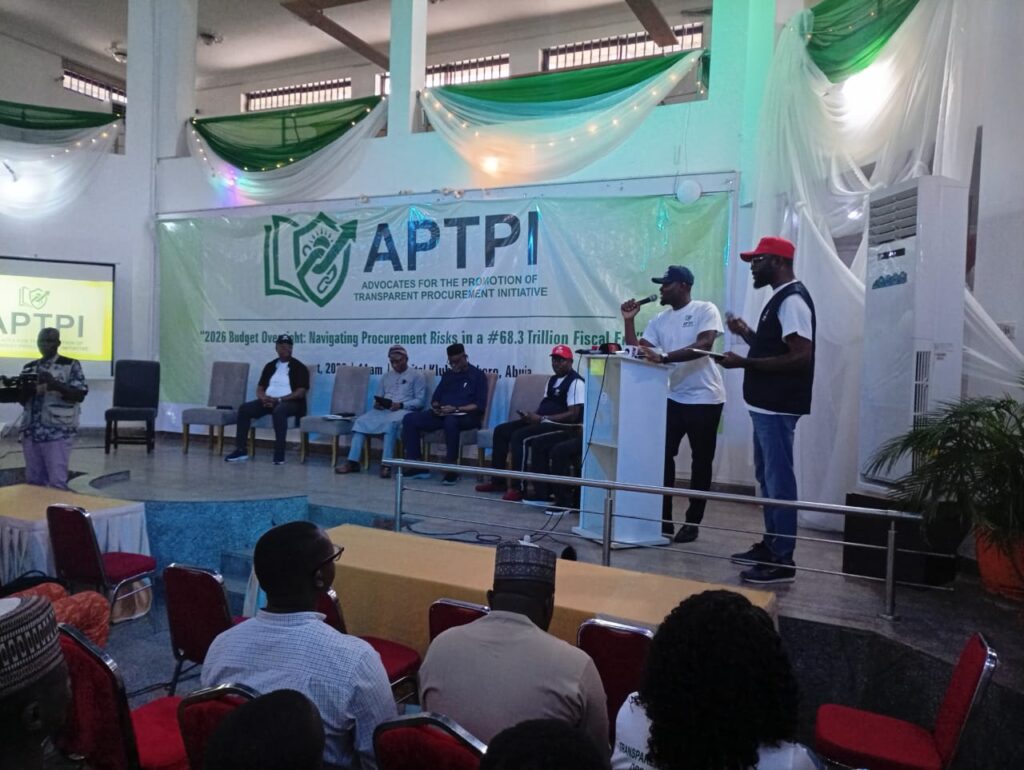
They made the calls at an awareness and engagement workshop organised by Natural Justice Nigeria in Abuja, where stakeholders discussed how communities, civil society organisations (CSOs) and the West African Power Pool (WAPP) can work together to promote a transparent, inclusive and accountable energy transition.
Presenting a paper titled “Building Dialogue Among Communities, CSOs and West African Power Pool Through Prevention of Electricity Crimes in Nigeria,” Executive Director of the Electricity Consumer Protection Advocacy Centre (ECPAC), Princewill Okorie, said electricity crime extends beyond theft and vandalism.
He argued that unlawful billing, illegal disconnections, estimated and bulk billing, failure to repair faults, non-refund of privately funded electricity infrastructure and the sale of meters meant to be provided free to consumers should also be treated as electricity crimes under the Electricity Act 2023 and Nigerian Electricity Regulatory Commission (NERC) regulations.
“Electricity crime includes unlawful actions that inflict economic losses on consumers, businesses and government while undermining social justice, consumer rights and confidence in Nigeria’s power sector,” Okorie said.
He warned that the governance failures affecting Nigeria’s electricity market could also derail the country’s transition to renewable energy.
Okorie expressed concern over the growing circulation of substandard solar products, poor-quality installations and weak enforcement of standards, saying many consumers are paying for renewable energy systems that fail to deliver value.
He also questioned why several publicly funded renewable energy projects, including mini-grids, solar-powered boreholes and solar streetlights, have become non-functional.
Okorie urged WAPP, governments and civil society groups across West Africa to integrate electricity crime prevention into regional energy transition strategies, insisting that clean energy goals cannot be achieved without tackling fraud, corruption and regulatory failures.
He also called for stronger consumer education, stricter monitoring of renewable energy contracts and greater accountability for agencies responsible for enforcing product standards.
Speaking at the workshop, Country Manager of Natural Justice Nigeria, Michael Keania Karikpo, said Nigeria is witnessing a rapid consumer-driven shift to renewable energy as households and businesses abandon the national grid because of rising electricity tariffs, unreliable supply and increasing fuel costs.
He cited estimates from global energy think tank Ember showing that Nigeria had about 800 megawatts (MW) of installed solar capacity in 2025, while businesses imported more than 1,700MW of solar panels from China in the first quarter of 2026, including over 1,200MW in March alone.
According to Karikpo, telecommunications companies, hospitals, universities, manufacturers and government institutions are increasingly investing in independent renewable energy systems.
“If electricity distribution companies fail to improve efficiency, transparency and service delivery, the growing consumer shift to clean energy could pose an existential challenge to their business models,” he said.
Karikpo said the high upfront cost of solar systems still limits access for many low-income households, making strong institutions essential to ensure an inclusive energy transition.
He described WAPP as a key institution for expanding cross-border electricity trade and integrating renewable energy across West Africa but said its decision-making process remains dominated by governments and technical experts.
Karikpo called for reforms that would give communities and civil society organisations a stronger voice in regional energy governance.
He said the workshop was designed to strengthen the capacity of communities and CSOs to support renewable energy expansion while fostering dialogue with WAPP on public participation, environmental accountability and regional initiatives such as the Clean Energy Corridor and Mission 300.