By Oluwakemi Kindness
Nigeria’s biosafety regulatory system is facing renewed scrutiny following concerns over the registration of four genetically modified cotton varieties in March 2026 without approval from the National Biosafety Management Agency (NBMA).
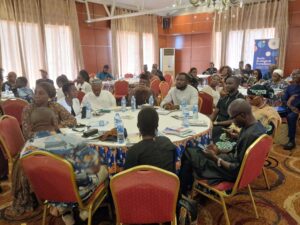
Environmental activist, Nnimmo Bassey, raised the issue on Monday at a National Biosafety and Agroecology Conference in Abuja, saying the development raises questions over compliance, transparency, and regulatory oversight in the country’s GMO approval process.
According to him, “this development exposes serious gaps in Nigeria’s biosafety framework and raises questions about accountability and transparency in GMO regulation.”

Bassy who is also the Exective Director, HOMEF said the situation highlights the need for urgent reforms, adding that “without stronger safeguards, Nigeria risks weakening public trust in its food safety system.”
Bassey also called for the repeal and redesign of the NBMA Act, arguing that it is no longer adequate to regulate modern biotechnology and contains weak safeguards for long-term risk assessment and liability.
“The current legal framework is outdated and not fit for the realities of modern biotechnology,” he said.
He urged the Federal Government to take a clear policy position on GMOs, warning that continued uncertainty could affect food sovereignty, environmental protection, and public confidence in Nigeria’s food system.
Also, Agricultural policy expert Prof. Johnson Ekpere said Nigeria’s food insecurity is driven largely by governance failures, insecurity, weak rural infrastructure, and poor policy implementation rather than a lack of agricultural technology.
“Food insecurity in Nigeria is fundamentally a governance problem, not a technology problem,” he said.
He added that biotechnology alone cannot address the structural challenges affecting food production, citing insecurity, post-harvest losses, and poor transport systems as major constraints.
Ekpere called for stronger governance systems and increased investment in agroecology as a sustainable pathway to improving food security and resilience in Nigeria.
The conference also featured two panel discussion on the implications of Nigeria’s continued adoption of GMOs, with participants drawn from across government, academia, civil society, farming communities, and the private sector.
The conference ended with calls for clearer regulatory direction on GMOs and stronger alignment between biosafety policy and national food security goals.