By Sofiat Adenekan-Abdul
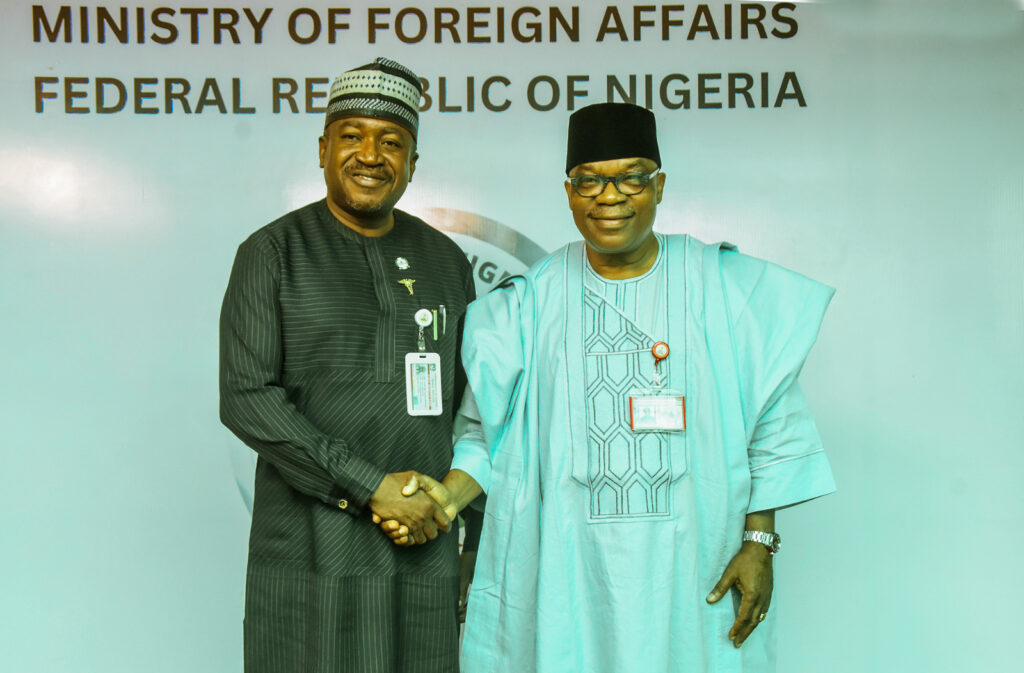
The Minister of State for Foreign Affairs, Sola Enikanolaiye, has said Nigeria must first address its economic challenges, security concerns and internal stability before it can effectively reclaim its leadership position in Africa and expand its influence on the global stage.
Speaking in Abuja at the launch of Shadows of Power, a book authored by retired Rear Admiral Sola Oluwagbire, Enikanolaiye said the reforms being implemented under President Bola Ahmed Tinubu are aimed at building a stronger domestic foundation capable of supporting a more assertive and impactful foreign policy.
He argued that no country can successfully pursue an activist foreign policy or command international respect while battling insecurity, economic hardship and internal divisions.
According to the minister, Nigeria’s longstanding leadership role on the continent can only be sustained through a stable political environment, a resilient economy and improved national security.
Enikanolaiye explained that the administration’s foreign policy is anchored on a “Nigeria First” doctrine, which prioritises the welfare, security and prosperity of citizens in all diplomatic engagements. He said the government has repositioned its external relations to better serve national interests, strengthen security partnerships and attract economic opportunities.
The minister added that Nigeria is placing renewed emphasis on relations with neighbouring countries, noting that the nation’s security and development are closely tied to the stability of the West African sub-region. While reaffirming that Africa remains the cornerstone of Nigeria’s foreign policy, he said domestic priorities are now receiving greater attention.
On global engagement, Enikanolaiye stressed that Nigeria will continue to pursue strategic autonomy by building partnerships based on national interests rather than ideological alignments. He reaffirmed the country’s commitment to maintaining robust ties with Western allies while deepening cooperation with emerging partners such as China, Russia, Turkey, Saudi Arabia and Brazil.
He also defended Nigeria’s renewed security cooperation with the United States and other Western nations, describing it as a pragmatic strategy to confront current security challenges and advance the country’s broader national objectives.