By Zainab Bakare
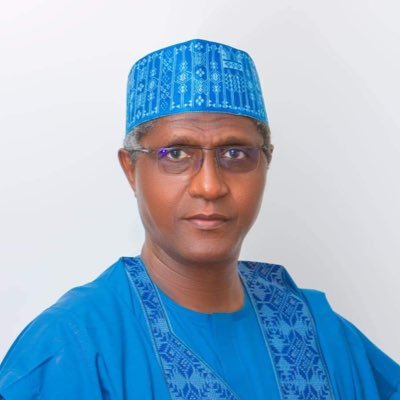
Kaduna State Governor, Uba Sani, has inaugurated the State Disarmament, Demobilisation and Reintegration (DDR), Peace and Security Committee, pledging strong political backing to ensure its effectiveness.
The initiative facilitated by the Office of the National Security Adviser and the National Counter Terrorism Centre marks the first time a subnational government in Nigeria is establishing a DDR committee as part of a structured approach to addressing insecurity.
Speaking at the inauguration, Sani reflected on Kaduna’s recent past, describing a period when banditry, kidnappings and violent crimes dominated large parts of the state.
“Not too long ago, Kaduna State stood at a precarious crossroads. Criminal elements had entrenched themselves across vast swathes of our territory,” he said.
He recalled how major routes such as the Kaduna–Abuja corridor and the Birnin Gwari axis became synonymous with fear, disrupting movement, livelihoods and economic activities.
Upon assuming office, the governor explained, his administration adopted a multi-dimensional approach to security combining military operations with dialogue and socio-economic interventions.
“We resolved from the outset that insecurity would not be approached with resignation, but with clarity, courage and innovation,” he stated.
Sani said this approach evolved into what he described as the “Kaduna Peace Model,” which targets the root causes of conflict, including poverty, social exclusion, limited access to education and unemployment.
He noted that collaboration with federal security agencies has significantly improved safety across previously volatile areas, restoring confidence among residents and boosting economic activity.
In her remarks, Director of Preventing and Countering Violent Extremism at the National Counter Terrorism Centre Ambassador Abimbola Wonosikou, described the inauguration as a major step toward long-term peace and development.
She revealed that the centre, in partnership with the United Kingdom’s Strengthening Peace and Resilience in Nigeria programme, conducted nationwide consultations to develop a coordinated DDR framework.
According to her, the consultations identified shared priorities and regional differences, providing guidance for a framework that is human rights-based, locally driven and nationally aligned.
Wonosikou explained that one key recommendation from the consultations was for states to establish DDR committees as implementation platforms.
“The establishment of this committee is not merely a bureaucratic exercise; it is a bold and practical step toward addressing the root causes of insecurity,” she said.
She added that the DDR approach aims to reduce violence by removing weapons from circulation, dismantling armed groups and reintegrating affected individuals into society.