By Oluwakemi Kindness
The House of Representatives has intensified its probe into over $2 billion in international health grants received by Nigeria between 2021 and 2025, raising fresh concerns over transparency, accountability, and impact.
Chairman of the House Committee on Infectious Diseases, Amobi Godwin Ogah, made this known at the resumed investigative hearing held at the National Assembly in Abuja, on wednesday.
The probe focuses on funds estimated at between $1.8 billion and $2.8 billion provided by the Global Fund and United States Agency for International Development (USAID) to support Nigeria’s response to HIV/AIDS, tuberculosis, malaria, and health system strengthening.
Ogah said the investigation, mandated by the House in October 2025, is not a witch-hunt but aimed at ensuring that public health funds are properly utilised.
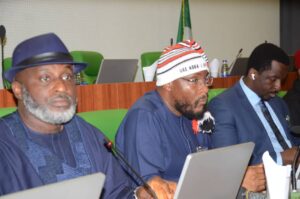
“This exercise is borne out of the desire to put Nigeria and Nigerians at the centre of all our policy thrust and to ensure that whatever grant we receive is judiciously expended,” he said.
Reps Push for Tighter Oversight
The lawmaker disclosed that the National Assembly would now require all implementation plans from principal recipients and partners handling Global Fund grants to be submitted for legislative approval.
He also called for quarterly reporting from all implementing agencies to improve monitoring and evaluation.
According to him, this will strengthen transparency and restore confidence among international donors.
Concerns Over Impact and Coordination
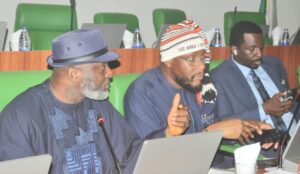
While commending donor partners and stakeholders for supporting Nigeria’s health sector, Ogah stressed the need to eliminate duplication of efforts among government agencies and non-state actors.
He noted that despite significant funding, Nigeria still faces major public health challenges, warning that the goal of eliminating diseases like HIV/AIDS, tuberculosis, and malaria by 2030 may no longer be realistic.
“We must roll up our sleeves because much needs to be done to maximise and efficiently utilise the resources at our disposal,” he added.
Key Stakeholders Present
The hearing was attended by top government officials and health sector stakeholders, including the Coordinating Minister of Health and Social Welfare, Muhammad Ali Pate, alongside representatives of the Global Fund Country Coordinating Mechanism and other implementing partners.
Stakeholders explained that the grants have been deployed across key intervention areas, including:
* HIV/AIDS response programmes
* Tuberculosis control
* Malaria interventions
* Resilience and Sustainable Systems for Health (RSSH)
They also noted that implementation involves collaboration among principal recipients and implementing partners across the health sector