By Julian Osamoto
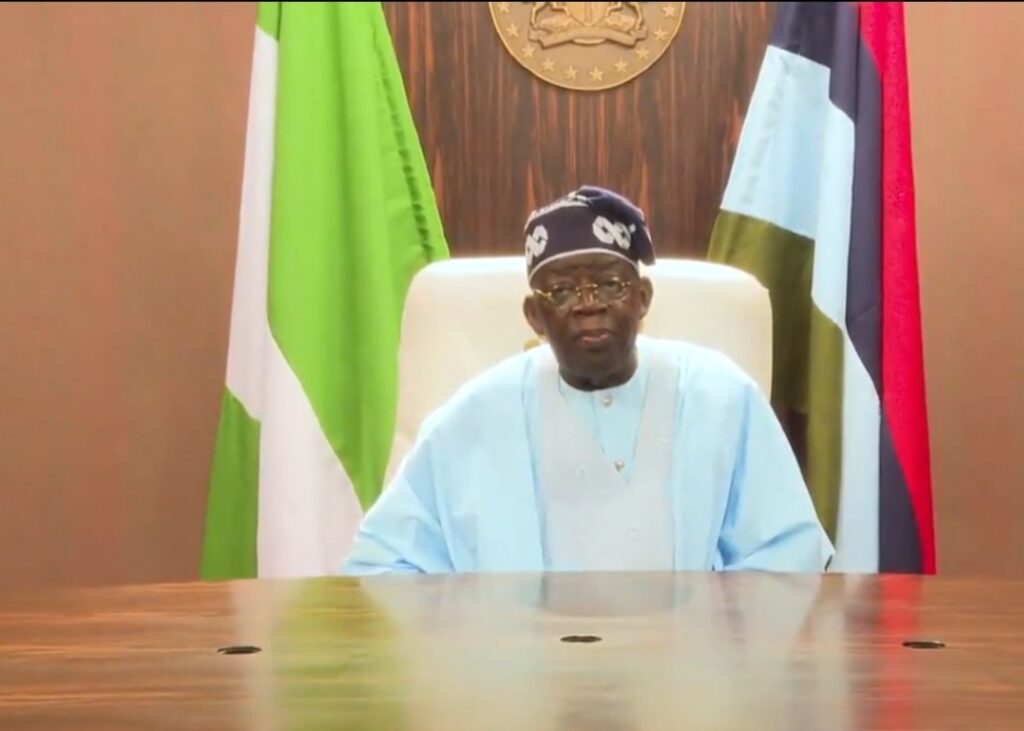
President Bola Tinubu has declared that Nigeria has moved beyond the difficult phase of economic reforms and entered an age of prosperity.
https://democracyradio.nilds.co/wp-admin/post.php?post=34056&action=edit
He made the declaration on Thursday in his Independence Day address to Nigerians, as the country marked its 66th anniversary.
The president said his administration’s economic reforms had corrected the country’s economic direction and laid the foundation for sustainable growth.
He acknowledged that the reforms had caused hardship for many Nigerians but argued that the difficulties were necessary to address longstanding weaknesses in the economy.
According to president Tinubu, Nigeria’s economy has grown by more than four per cent in 2026, while inflation has fallen from its peak, foreign reserves have been rebuilt and the foreign exchange market has stabilised.
He also said oil theft had declined and that Nigeria recorded more than six billion dollars in non-oil export revenue in 2025, which he described as the highest in the country’s history.
President Tinubu said the government’s priority had now shifted from correcting economic distortions to achieving “shared and widespread prosperity”.
He identified reducing the cost of living, increasing agricultural production, expanding industrial activity and creating jobs as key areas of focus.
The president said the government would expand mechanised irrigation and dry-season farming, improve access to seeds and fertiliser, invest in storage and transportation, and continue the development of roads, railways and ports linking farms and factories to markets.
He assured that his administration would also use Nigeria’s gas resources to support new industries, revive factories, expand digital connectivity and develop skills required by employers.
President Tinubu said the government would continue to support Nigerian businesses with infrastructure and financing to enable them to expand and create jobs.
On social protection, the president said the government was strengthening direct support for vulnerable households and improving the National Social Register to ensure assistance reaches people who need it.
He highlighted the Nigerian Education Loan Fund and the Consumer Credit Corporation, CREDICORP, as initiatives designed to improve access to higher education and consumer credit.
Tinubu said the government would continue working with state and local governments to strengthen primary healthcare, basic education and other essential public services.
He noted that salaries and pensions had been paid on time and in full since 2023, while reforms to the national pension programme were intended to benefit retirees and vulnerable Nigerians.
The president affirmed that the government’s objective was not simply to manage poverty but to eliminate it through sustained economic growth and the creation of productive opportunities.
On poverty Tinubu stressed that “We will defeat it.”
He called on Nigerians to maintain faith in the country and work collectively towards building a more prosperous nation.
Tinubu noted that Nigeria had “corrected its course” and urged citizens to look ahead rather than return to the difficulties that preceded the reforms.
“The age of reform has done its work. Now begins the age of prosperity,” he said.
The president concluded by describing the Nigeria he seeks to build as a country of abundance and opportunity, where prosperity is broadly shared and children can pursue their aspirations regardless of their circumstances of birth.
He urged Nigerians to move forward together, saying, “No looking back.”