By: Julian Osamoto
A new report by Kimpact Development Initiative (KDI) has revealed significant gaps in democratic governance across Nigeria, with no state attaining a high level of democratic performance despite widespread electoral activity and institutional presence.
The report, titled State of Democracy in Nigeria Report 2025, launched by KDI in Abuja, presents the most comprehensive subnational assessment of democratic governance in the country, evaluating all 36 states using a structured, evidence-based framework.
According to the findings, “not a single Nigerian state reaches the High Democratic Performance band,” underscoring what the organisation described as a disconnect between democratic processes and governance outcomes.
Executive Director of KDI, Bukola Idowu, said the report goes beyond traditional election observation to examine how democracy functions in practice.
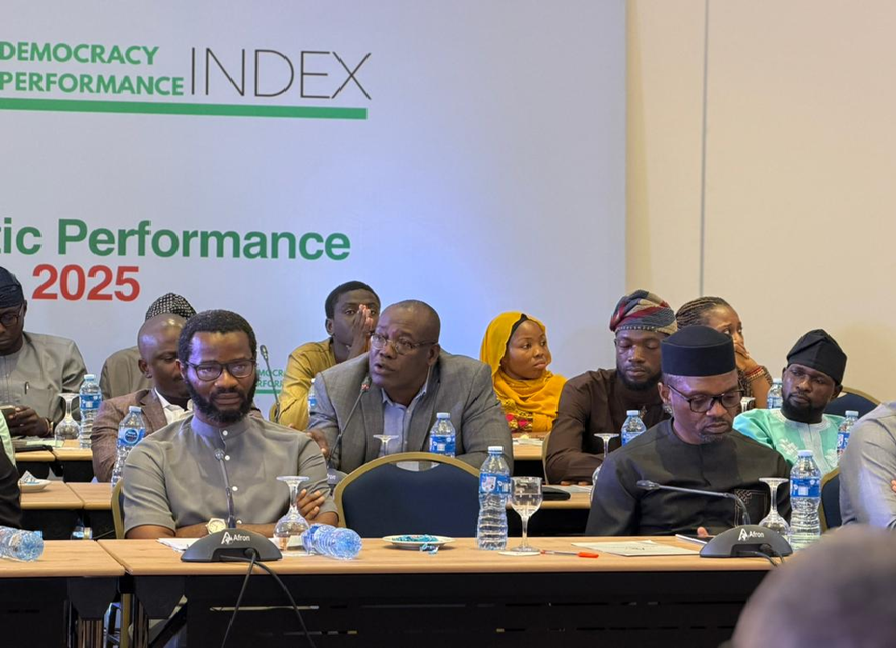
The assessment, built on the Democracy Performance Index (DPI), analysed data collected between September and December 2025, drawing from over 7,000 citizen and stakeholder responses, institutional checklists, and official records from electoral bodies, legislatures, and civil society organisations.
The report categorises only six states Oyo, Yobe, Ekiti, Nasarawa, Ondo, and Osun as demonstrating moderate democratic performance, representing 16.7 percent of the total.
A significant majority, 28 states, representing 77.8 percent, fall within the low-performance category, while Jigawa and Rivers states were identified within the weakest performance band.
KDI noted that while democratic structures such as elections and institutions are present nationwide, they do not consistently translate into accountability, inclusive representation, or protection of civic freedoms.
“Democracy is active across the country; institutions exist, elections are held, and citizens participate, but these processes do not consistently produce accountable governance,” the report stated.
A key issue highlighted is political inclusion, which is described as the most constrained dimension across all states. The report found that no state achieved even moderate representation levels for women, youth, and persons with disabilities PWDs.
Institutional effectiveness also remains uneven, with many state institutions facing challenges related to transparency, oversight, and accountability. Civic space varies across states, with some maintaining relatively open environments while others exhibit restrictions on civic actors.
KDI emphasised that the findings should not be interpreted as a failure of democracy, but rather as evidence of uneven performance and systemic constraints.
“The report does not present a binary picture of success or failure. Instead, it highlights a system that is functioning procedurally but remains constrained in depth and outcomes,” it adds
The organisation explained that the DPI is intended as a diagnostic tool to support policy reforms, strengthen institutions, and improve the link between citizen participation and governance outcomes.
It also urges stakeholders, including policymakers, civil society, and the media, to prioritise issue-based reporting that reflects the complexity of democratic performance rather than simplistic rankings.
In his keynote address, Adetunji Ogunyemi emphasised the need to move beyond formal democratic structures, focusing instead on how governance is experienced by citizens in practical terms.
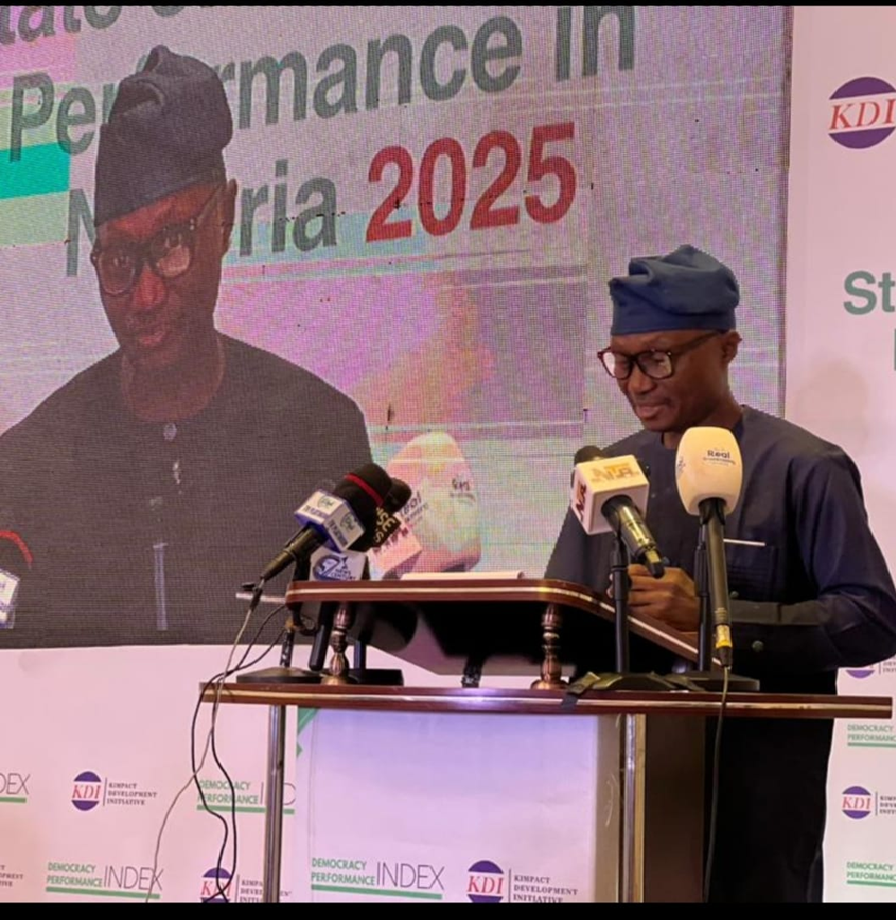
Also speaking, Achike Chude, National Secretary of the NUJ, highlighted the fragility of democratic transitions.
“The most vulnerable and critical period in any nation is the time of transition.” “That instrument by which they may be able to explain, either to the electorate or to the general public, the extent of their domesticating democratic practices at the subnational level. This is a concern for democratic practice in Nigeria. And if we must be concerned about democratic practice in Nigeria, we should be able to clarify, define, measure, and test those things that make for democracy”. he explained
He warned that Nigeria’s democratic journey requires urgency, noting that unlike older democracies, the country operates within a compressed timeline with higher stakes.
In separate goodwill messages, Omolara Akinyeye the Deputy Executive Director at Policy Legal and Advocacy Center (PLAC) and Busari Sarafadeen, the Director General Conference of Speakers of State Legislators in Nigeria, commended KDI for producing a data-driven report capable of informing governance reforms.
The report is expected to contribute to ongoing policy discussions and provide a benchmark for tracking democratic progress across Nigeria’s states.