By Oluwakemi Kindness
Oil industry regulators and operators have opposed a proposal requiring oil and gas producing companies in the South-South to contribute three per cent of their total annual budgets to the South-South Development Commission (SSDC).
Thet warn that the levy could increase production costs, discourage investment and duplicate existing statutory obligations.
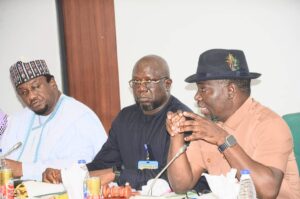
The stakeholders made their positions known on Wednesday during the resumed public hearing on a bill seeking to amend the South-South Development Commission (Establishment) Act, 2025, to expand the Commission’s funding sources.
Presenting the position of the Nigerian Upstream Petroleum Regulatory Commission (NUPRC), the Commission Chief Executive, Oritsemeyiwa Eyesan, represented by the Head of Regulations and Statutory Compliance, Kingsley Chikwendu, expressed support for a transparent and sustainable funding framework for the Commission.
However, he said the proposed three per cent contribution raises significant legal, fiscal and operational concerns.
According to Chikwendu, the bill does not define the phrase “total annual budget,” creating uncertainty over how contributions would be assessed, calculated, enforced and administered.
“If implemented in its current form, the proposal could effectively introduce another expenditure-based levy payable irrespective of profitability, production levels or the prevailing financial condition of affected companies,” he said.
He noted that upstream operators already meet several statutory obligations, including royalties, petroleum taxes, the Niger Delta Development Commission (NDDC) levy, Host Community Development Trust Fund contributions under the Petroleum Industry Act (PIA), the Nigerian Content Development Fund, environmental remediation obligations and abandonment fund contributions.
Chikwendu urged lawmakers to assess the impact of the proposed levy on production costs, investment decisions and the competitiveness of Nigeria’s upstream petroleum industry before taking a final decision.
Also the Nigerian Midstream and Downstream Petroleum Regulatory Authority (NMDPRA) also urged the committee to align any new funding mechanism with the fiscal philosophy of the Petroleum Industry Act.
Representing the Authority, Senior Manager Ahmed Laido said any additional financial obligation should promote regulatory certainty, strengthen investor confidence and support the Federal Government’s ease-of-doing-business reforms.
He warned that the funding framework should achieve the Commission’s developmental objectives without undermining the sustainability and global competitiveness of Nigeria’s petroleum industry.
Similarly the Oil Producers Trade Section (OPTS) of the Lagos Chamber of Commerce and Industry also cautioned against introducing another statutory levy on operators.
Its Chairman, Bala Wudiri, said operators already make substantial statutory contributions under existing laws, including payments to the NDDC and the Host Community Development Trust Fund.
He warned that an additional three per cent contribution could increase the financial burden on operators, duplicate existing obligations and reduce Nigeria’s attractiveness as a destination for oil and gas investment.
Wudiri called on lawmakers to provide greater clarity on the proposed funding model and adopt a balanced approach that would strengthen the Commission without discouraging investment.
Responding, Chairman of the House Committee on the South-South Development Commission, Rep. Julius Gbabojor Pondi, said the resumed hearing was convened to allow stakeholders who missed the earlier session due to the Nigerian Oil and Gas (NOG) Conference to present their views.
He said the House remained committed to a transparent and inclusive legislative process.
“We are particularly interested in receiving constructive contributions on the proposed funding framework, its sustainability, its implications for government and industry, as well as alternative proposals that can further strengthen the objectives of the legislation,” Pondi said.
He said the amendment seeks to strengthen the Commission’s funding base to enable it to address infrastructure deficits, environmental degradation and other development challenges across the South-South.
Pondi assured stakeholders that every memorandum and presentation would be carefully reviewed before the committee makes its recommendations to the House of Representatives.
The committee is expected to consider all submissions before forwarding its report on the proposed amendment for further legislative action.