By Oluwakemi Kindness
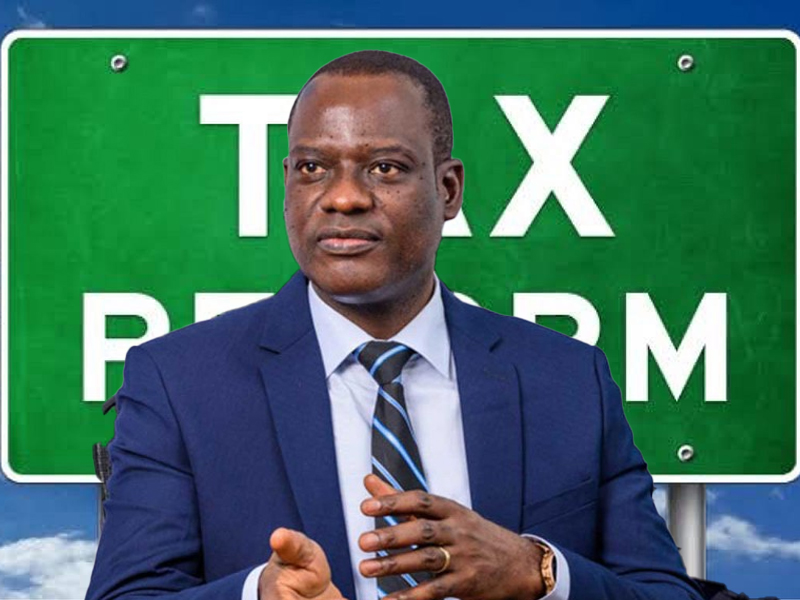
The Presidential Fiscal Policy and Tax Reforms Committee has dismissed claims that Nigeria’s new tax laws will negatively affect the aviation industry.
Rather it is insisting that the reforms are designed to ease long-standing cost pressures on airlines rather than worsen them.
In a statement on monday, the committee acknowledged the genuine challenges confronting airline operators, particularly the burden of multiple taxes, levies and regulatory charges, noting that government engagement with industry stakeholders is ongoing.
According to the Chairman of the committee, Taiwo Oyedele, the new tax framework directly addresses several structural issues that have historically driven up operating costs in the aviation sector.
Removal of Withholding Tax on Aircraft Leases
He said one of the most significant changes is the removal of the 10 per cent withholding tax previously imposed on aircraft leases. Under the new law, the tax has been replaced with a rate to be set by regulation, providing a legal basis for either a full exemption or a substantially lower rate.
The committee explained that under the old regime, airlines leasing aircraft worth about $50 million paid as much as $5 million in non-recoverable withholding tax, a cost that directly strained cash flow. Eliminating this burden, it said, offers major relief to the sector.
VAT Reforms to Ensure Neutrality
The committee also clarified that the new tax laws make airlines fully VAT-neutral. While the VAT suspension introduced in 2020 appeared beneficial, it prevented airlines from recovering input VAT on several items, embedding hidden costs in their operations.
Under the new framework, VAT paid on imported or locally sourced assets, consumables and services will be fully recoverable. The law also mandates VAT refunds within 30 days, supported by a funded tax refund account, with the option to offset VAT credits against other tax obligations.
Import Duty Exemptions Retained
The statement further assured operators that existing import duty exemptions on commercial aircraft, engines and spare parts remain unchanged, stressing that the reforms introduce no new import-related tax burden on airlines.
Minimal Impact on Ticket Prices
Addressing concerns about airfare increases, the committee noted that airline operations are typically low-margin and that the 7.5 per cent VAT on tickets, within a fully recoverable VAT system, would have a significantly lower net effect than suggested.
It stated that even in a worst-case scenario, a ₦125,000 ticket would rise to a maximum of ₦134,375, while a ₦350,000 ticket would not exceed ₦376,250.
Tttax
The new law, according to the committee, provides a framework to reduce corporate income tax from 30 per cent to 25 per cent, a move expected to benefit airlines. It also harmonises several profit-based levies, including Tertiary Education Tax, NASENI, NITDA and Police levies, into a single Development Levy to reduce complexity and improve certainty.
Multiple Levies Not Caused by New Laws
While acknowledging the reality of multiple levies imposed on airlines and tickets, the committee stressed that such charges were not created by the new tax laws. It said the government is working with operators and relevant agencies to resolve the issue, adding that tax harmonisation provisions under the reforms will improve the situation from 2026.
The committee concluded that the new tax laws provide a strong legal and policy framework to address long-standing tax challenges in the aviation sector, reduce airline operating costs and limit the impact on passengers.
It urged stakeholders to sustain engagement, noting that unfounded claims could hinder progress, and reaffirmed that the tax reforms are part of the solution rather than the problem.