By Julian Osamoto

The Federal Government has unveiled a strategic plan to increase Nigeria’s yam production from 10 metric tonnes to 30 metric tonnes per hectare, as part of efforts to address a national supply deficit of more than 50 million metric tonnes.
The announcement was made at the National Yam Advocacy Summit organised by the International Institute of Tropical Agriculture in collaboration with the Federal Ministry of Agriculture and Food Security in Abuja.
Minister of State for Agriculture and Food Security, Aliyu Sabi Abdullahi, said the initiative falls under the government’s “Ramping Up” programme, anchored on three pillars: expanding land under yam cultivation, increasing yield to 30 metric tonnes per hectare, and reducing post-harvest losses from 40% to 25% by the end of 2027.

In a statement signed by Eremah Anthonia, Assistant Director in the ministry, the minister said the programme would adopt global best practices, using verified data, realistic projections, mechanisation, cluster-based farming, post-harvest loss reduction and improved market integration.
He added that a key innovation was the classification of staple crops into tiers based on national spread, consumption patterns and strategic importance. Yam, he said, has been designated a Tier-1 crop because of its nationwide demand and role in food security and economic growth.
With current productivity at 10 metric tonnes per hectare, Nigeria produces about 67.2 million metric tonnes of yam annually, accounting for roughly 67% of global production.
Mr Abdullahi said achieving the new targets would help close the demand gap, raise farmer incomes and position Nigeria to capture a larger share of the global yam market.
“This shortfall underscores both the untapped potential of the sector and the urgent need to modernise the yam value chain,” he said.
He described yam as central to Nigeria’s economy and culture, saying it represents both sustenance and wealth for millions of Nigerians.
The ministry, he said, would support scaling up innovations through sustainable seed production, engagement with seed companies, climate-resilient varieties, farmer training, extension services and improved access to finance and mechanisation.
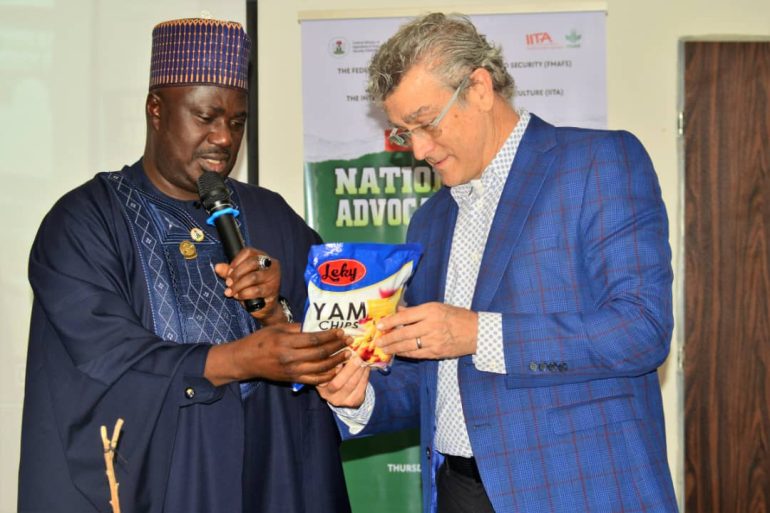
He also pointed to opportunities in yam processing, storage and export development, arguing that reducing post-harvest losses and improving quality standards could help Nigeria move from being the largest producer to a leading exporter of value-added yam products.
Mr Abdullahi said government alone could not transform the sector, calling for collaboration among ministries, research institutions, state governments, private investors, development partners and farmer cooperatives.
He noted that under President Bola Ahmed Tinubu’s Renewed Hope Agenda, agriculture has been elevated to a national priority. In 2023, the president declared a state of emergency on food security.
The minister said the ministry, working with the Economic Management Team, had introduced short-term measures to stabilise supply, including boosting dry season production and structured grain releases. A high-level technical team was later established in March 2025 to develop the “Ramping Up Staple Crops Production for Renewed Hope Food Security” programme.
He commended the International Institute of Tropical Agriculture for advancing early generation seed production and propagation technologies, which he said could increase productivity by between 70% and 140% while reducing disease risks.
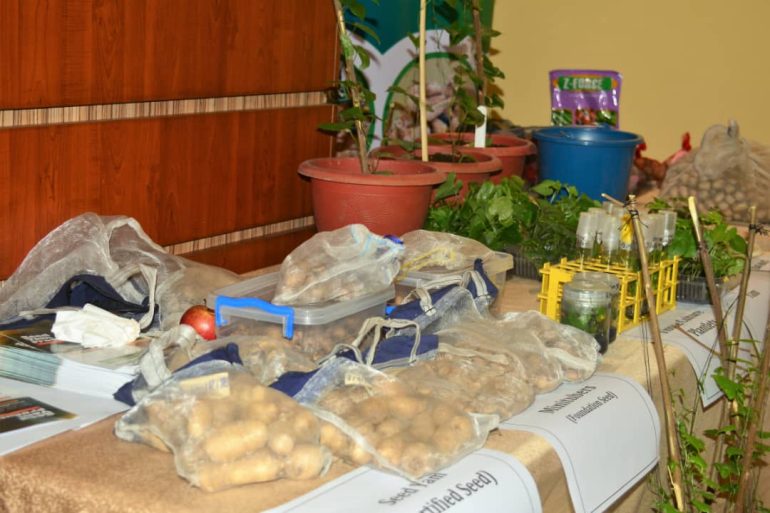
The former Root and Tuber Expansion Programme, he added, has been restructured into the Root and Tuber Industry and Export Development Programme under the Federal Department of Agriculture to give yam and other root crops greater policy attention.
In his remarks, Tahirou Abdoulaye, Deputy Director-General for Partnerships for Delivery and Scaling at IITA, said the institute was collaborating with the ministry to share technical expertise, particularly on yam seed systems.
He said improved varieties developed through breeding programmes had been adopted across West Africa, but stressed that efficient seed systems were needed to ensure farmers gained access to them.
Director-General of the National Agricultural Seed Council, Fatuhu Mohammed, described yam as both culturally symbolic and economically strategic for Nigeria, noting the importance of regulatory compliance and quality assurance as production expands.
Representatives of Sahel Consulting, the Bill & Melinda Gates Foundation, farmers’ associations and other development partners attended the summit.
The event featured a presentation on the yam value proposition and a short testimonial video highlighting sector opportunity.