By Julian Osamoto
Humanitarian leaders have called for stronger investment in locally led responses, warning that shrinking global aid funding, worsening food insecurity and rising humanitarian needs are placing millions of vulnerable Nigerians, particularly children, at greater risk.
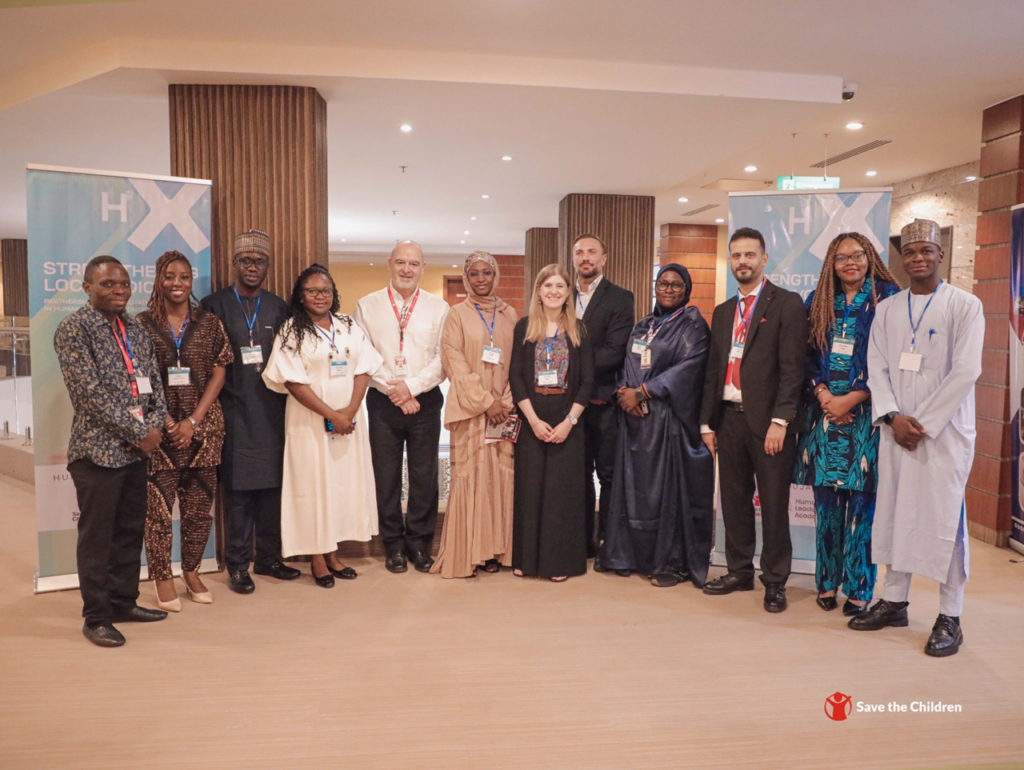
They made the call on Tuesday, at the opening of the Humanitarian Xchange (HX) Abuja 2026, a two-day conference organised by the Humanitarian Leadership Academy (HLA) in collaboration with Save the Children Nigeria.
The forum brought together humanitarian organisations, government representatives, local responders, academia, donors and development partners to strengthen collaboration and innovation in humanitarian response.
Speaking at the conference, Save the Children Nigeria’s Country Director, Duncan Harvey, said Nigeria is facing one of its most severe humanitarian periods as millions struggle with hunger and malnutrition during the current lean season.
Harvey said 36.2 million people across 26 states and the Federal Capital Territory are projected to face acute food and nutrition insecurity between June and August 2026, with two million expected to experience emergency levels of hunger.
“Children and mothers are at the frontline of this crisis, rising food prices, limited access to healthcare, poor dietary diversity, conflict, displacement and climate-related shocks are making it increasingly difficult for families to meet even their most basic needs.” Harvey said.
He warned that humanitarian challenges are becoming more complex as global conflicts, climate emergencies and reductions in international funding continue to stretch humanitarian resources.
“No single organisation can address the scale of today’s challenges alone, when we coordinate effectively, we reduce duplication, use resources more efficiently, amplify local leadership and ensure assistance reaches those who need it most.” He stated.
Harvey said the conference provides an opportunity for humanitarian actors to build stronger partnerships capable of delivering sustainable solutions for vulnerable communities.
On his part, the Director of the Humanitarian Leadership Academy, Pawel Mania, said humanitarian responses are most effective when local organisations are placed at the centre of decision-making rather than being treated as peripheral actors.
“Local actors are always the closest to the response. This is where the knowledge sits and this is where decisions should be made,” Mania said.
He noted that one of the objectives of the conference is to create space for local organisations to learn from one another without being overshadowed by larger international agencies.
Mania explained that rather than solving humanitarian crises directly, the academy focuses on equipping local responders with the knowledge and skills needed to respond effectively. “We make sure that people have enough skills and knowledge to solve the crises themselves,” he said.
He disclosed that HLA’s digital learning platform, Kaya Connect, has trained nearly one million humanitarian workers globally over the past decade, with Nigeria ranking among its top five countries for learner participation.
According to him, the strong uptake demonstrates growing demand among Nigerian responders for practical humanitarian knowledge and professional development.
On technology, Mania said artificial intelligence presents significant opportunities to strengthen humanitarian action if local voices are actively involved in shaping its application.
“We are championing local voices in conversations about where AI is heading and how it can support humanitarian action,” he said. “These conversations should not happen only in the Global North.”
Also speaking, Joshua Anar, Director of Programme Operations for Save the Children International in Nigeria, said children remain the most severely affected population in the country’s humanitarian crisis.
“Millions of children are suffering from food insecurity and malnutrition,” Anar said. “Their education has also been disrupted by conflict, displacement and other forms of insecurity.”
He described HX Abuja as an important platform for humanitarian organisations to exchange experiences and strengthen collaboration across operational areas.
“We work in the same communities and face similar challenges, but opportunities to genuinely connect and discuss how we can respond better do not always exist,” he said.
Anar noted that participants had travelled from conflict-affected states including Borno, Yobe, Adamawa and Sokoto to discuss practical ways of improving humanitarian coordination.
He stressed that strengthening local organisations remains central to achieving more effective humanitarian responses because community-based organisations often have the deepest understanding of local realities.
“Local organisations are rooted in the communities where they work. They are the closest to the response areas,” Anar said.
He urged governments, international organisations and development partners to invest more in building the capacity of indigenous humanitarian organisations. “We call on all actors to strengthen local organisations so they can respond better, faster and more efficiently.”
The Executive Director of Forward in Action for Education, Poverty and Malnutrition (FESPAM), Dabis Mwalike, said persistent reductions in humanitarian funding are already affecting service delivery across Nigeria.
“We have seen sustained dwindling of funding in the humanitarian space, and this is affecting humanitarian responses,” Mwalike said.
Mwalike argued that collaboration among indigenous organisations remains key. “No one partner can solve humanitarian issues entirely, when we work as consortiums, we combine our strengths and are better positioned to attract funding for critical interventions in water, sanitation, nutrition and livelihoods.”