By Chinedu Echianu
The Trade Union Congress of Nigeria (TUC) has said it played a major role in securing the three-year lifespan of the N70,000 national minimum wage, instead of the five-year period initially contemplated during negotiations with the Federal Government.
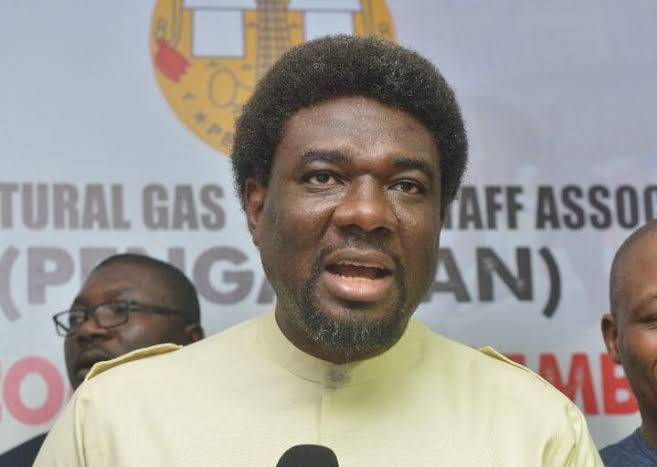
TUC President, Engr. Festus Osifo, disclosed this in Abuja at a world press conference, saying the union had deliberately pushed for a shorter duration to ensure that workers would have an opportunity for a fresh review of their wages amid changing economic conditions.
Osifo said the effort to reduce the lifespan of the minimum wage from five years to three was “majorly championed” by the TUC, with several meetings held with the government before the union eventually succeeded.
“When we signed the last minimum wage, in fact, the effort to get that minimum wage to run for three years instead of five years was majorly championed by Trade Union Congress of Nigeria,” Osifo said.
“There were meetings that we held in order to push government to say, no, let’s experiment this for three years against five years. And we succeeded in that regard.”
The current minimum wage law was signed in August 2024, meaning that, according to the TUC, there is still about one year remaining before the current wage arrangement expires in August 2027.
Osifo, however, said the union would not wait until the expiration date before preparing for a new minimum wage, stressing that workers must have a fresh wage regime in place before the current one expires.
He said the TUC was already prepared to commence negotiations with the government whenever the process begins.
“For us, we are prepared to negotiate at any time,” he said.
“But all we have told them is that when the next minimum wage is expiring in August 2027, we must have a new minimum wage in place.”
The TUC president further said the negotiation process did not necessarily have to be prolonged, arguing that a new minimum wage could be negotiated within a month if the government was ready to engage the organised labour.
“If government is ready, even within one month, this can be done. This can actually be done within one month,” he said.
Osifo said that although the current minimum wage remained in force for another year, the government could still take additional measures to ease the economic difficulties facing Nigerian workers.
He cited the recent increase in military earnings as an example, arguing that government could improve workers’ earnings even without waiting for a formal minimum wage negotiation.
According to him, some state governments were already taking similar steps.
“The government, the military did not go into negotiation with government, but government increased their earnings. So that was why we are advocating. Even without negotiation, government could do it,” he said.
He said the TUC would continue to push for measures capable of ameliorating the economic hardship confronting workers during the remaining period of the current minimum wage.