By Oluwakemi Kindness
The United Nations Development Programme (UNDP) has warned that gender-based violence (GBV) and intimate partner violence (IPV) are undermining Nigeria’s efforts to control HIV, as stakeholders called for stronger investments and coordinated interventions to address the challenge.
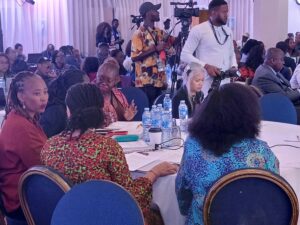
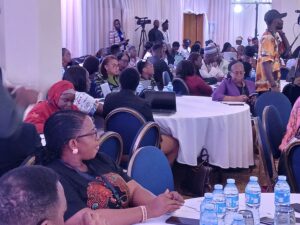
The warning was issued at a National Consultative Workshop on Programming for the Prevention of Intimate Partner Violence and Gender-Based Violence in Nigeria, held as part of preparations for the Global Fund Grant Cycle 8 (GC8).
Speaking at the workshop, UNDP Head of Gender, Onyinye Ndubuisi, said many women who test positive for HIV, particularly during antenatal care, often face fear, stigma and the possibility of violence when disclosing their status to partners.
According to her, such fears discourage women from seeking healthcare, adhering to treatment and accessing support services, ultimately affecting efforts to end the HIV epidemic.
Ndubuisi called for practical, multi-sectoral solutions involving health, justice and social protection institutions, stressing that GBV should be treated as a dedicated programme area rather than a secondary issue.
Also speaking, Head of HIV at the Global Fund, Dr. Izukanji Sikazwe, described gender-based violence as one of the major structural barriers to HIV prevention and treatment.
He said violence and discrimination continue to prevent many vulnerable people from accessing lifesaving services and urged stakeholders to prioritise interventions that reduce violence and improve access to HIV, tuberculosis and malaria programmes.
UNAIDS Country Director in Nigeria, Tina Bunto, said the workshop would help shape future Global Fund investments, emphasizing the need to integrate survivor support services and reporting mechanisms into HIV programmes.
The Federal Ministry of Justice also warned that stigma, discrimination and legal barriers continue to fuel new HIV infections among vulnerable populations.
Representing the Attorney-General of the Federation and Minister of Justice, Director of Public Prosecution of the Federation, Rotimi Oyedepo (SAN), said key populations and their partners account for about 40 per cent of new HIV infections despite representing less than five per cent of the population.
According to him, Nigeria’s HIV prevalence has declined to 1.4 per cent, but fear, stigma and discrimination remain major obstacles to accessing healthcare services.
“These are not just statistics. They are the lived consequences of structural barriers to healthcare access,” he said.
Oyedepo described gender-based violence and intimate partner violence as significant drivers of the HIV epidemic, noting that survivors are often less likely to seek testing, treatment and continued care.
Meanwhile, the National Human Rights Commission (NHRC) revealed that Nigeria recorded 2,755 cases of gender-based violence and intimate partner violence between January and April 2026.
Speaking on behalf of NHRC Executive Secretary, Tony Ojukwu, Senior Human Rights Adviser, Hilary Ogbonna, said data from the Commission’s Human Rights Observatory showed that 1,255 of the reported cases were perpetrated by family members, while 613 involved religious leaders.
He described GBV and IPV as serious violations of human rights and warned that they pose significant threats to public health, social stability and national development.
The Commission called for stronger prevention measures, improved reporting systems, survivor support services and greater accountability for perpetrators.
Stakeholders at the workshop agreed that addressing gender-based violence and intimate partner violence is critical to achieving Nigeria’s HIV control targets and improving access to healthcare for vulnerable populations.