By Oluwakemi Kindness
Senator Ireti Kingibe has raised concerns over the low representation of women in Nigeria’s emergency and security services, revealing that female personnel account for less than 20 percent of the workforce, with even fewer occupying leadership positions.
Speaking at the 9th Road Safety and Emergency Stakeholders Forum in Abuja, the lawmaker who chairs the Senate Committee on Women Affairs described the gender gap as systemic and longstanding, urging immediate reforms to dismantle barriers limiting women’s participation.
According to estimates from agencies such as the Nigeria Police Force and the Federal Fire Service, female representation across most emergency services ranges between 15 and 20 percent.
Kingibe noted that Nigeria has never produced a female Inspector General of Police, Fire Chief, or Corps Marshal, highlighting the depth of inequality at the highest levels.
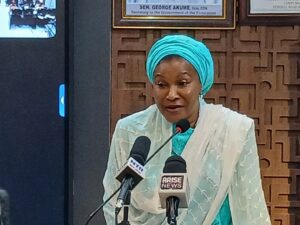
Despite their limited numbers, she emphasized that women play indispensable roles in crisis response—particularly in addressing gender-based violence, supporting displaced persons, and delivering psychosocial care in humanitarian settings.
Backing this, studies by UN Women and the World Bank show that gender-diverse teams often perform better in emergencies, improving decision-making, accountability, and public trust.
However, the senator identified persistent challenges, including workplace discrimination, harassment, and lack of gender-sensitive infrastructure such as properly fitted uniforms and adequate facilities.
She added that cultural norms and stereotypes continue to discourage women from entering or advancing in roles perceived as physically demanding.
“It’s not enough to say everyone is welcome,” Kingibe said. “We must ensure that when women show up, the system is ready to support them.”
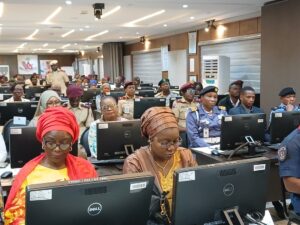
In a related development, the Federal Road Safety Corps also called for the institutionalization of gender-inclusive policies to strengthen women’s participation in emergency services.
The Corps Marshal, Shehu Mohammed, in a statement delivered by Deputy Corps Marshal Pauline Olaye, stressed the need for deliberate action, including expanded capacity-building and safer work environments.
The Corps acknowledged that women have continued to demonstrate professionalism and leadership across sectors such as road safety, healthcare, disaster management, and law enforcement.
It noted that within the agency, women have risen to key roles, including Deputy Corps Marshals, Assistant Corps Marshals, and Sector Commanders nationwide—contributing to improved service delivery and public confidence.
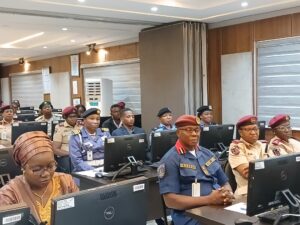
Despite these gains, the agency admitted that barriers such as limited access to top leadership roles, inadequate institutional support, and the challenge of balancing career demands with societal expectations remain significant.
“These challenges are real and require deliberate, sustained and collective action to overcome,” the statement said.
The Corps maintained that empowering women is not only a matter of fairness but also critical to operational efficiency, innovation, and national development, urging stakeholders to collaborate in building a more inclusive system.
Meanwhile, co-organisers of the forum, Lifeline Care, highlighted the need for stronger capacity, infrastructure, and public awareness in emergency management.
They added that increasing women’s participation could improve safety outcomes, reduce risk-taking behaviour, and enhance overall response effectiveness across Nigeria’s emergency services.