By Anayo Akwitti
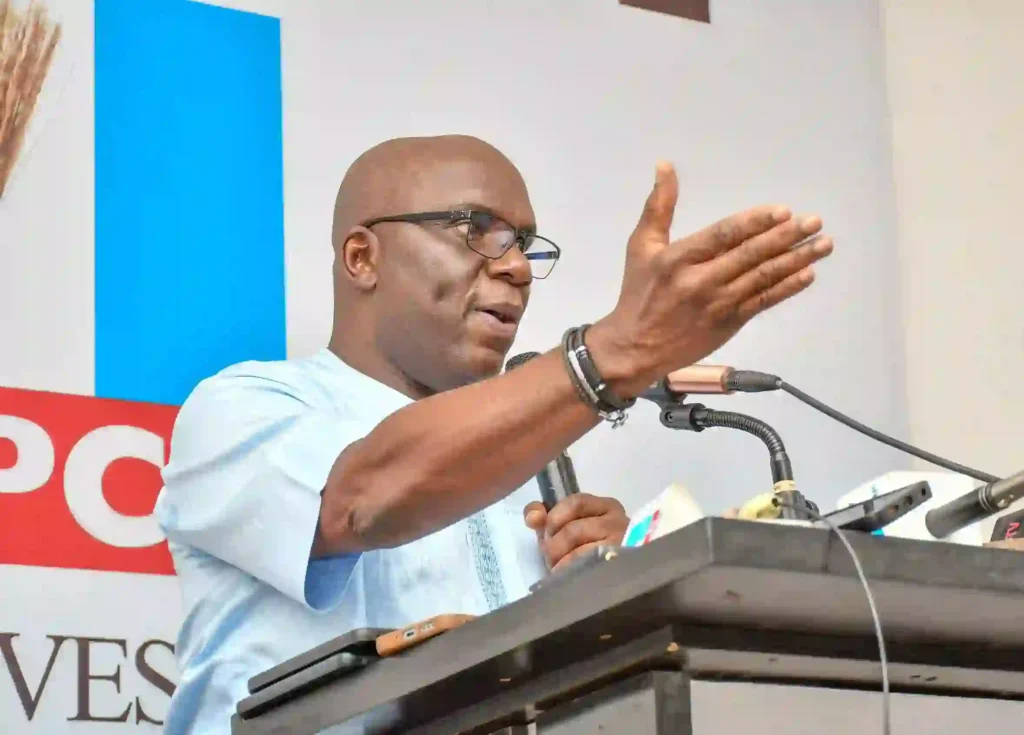
Nigeria’s Senate descended into a rowdy session on Wednesday after Senator Adams Oshiomhole challenged the newly revised provisions in the chamber’s standing rules, defying a direct ruling by Senate President Godswill Akpabio.
The tension flared during plenary when Oshiomhole attempted to raise a point of order on the amended Orders 4 and 5—despite being ruled out of order by Akpabio.
The former Edo State governor stood his ground, insisting on being heard, triggering murmurs and visible unease across the chamber.
The controversial amendments, adopted a day earlier following a three-hour closed-door session, have reshaped the eligibility criteria for leadership positions in the 11th Senate.
The revisions are widely interpreted as a strategic move to sideline certain aspirants.
Under the new Order 4, nominations for presiding officers must strictly follow a hierarchical ranking system.
Priority is given to former Senate Presidents and Deputy Senate Presidents, followed by ex-Principal Officers, ranking senators with at least one term, former House of Representatives members, and finally first-time senators—only if no higher-ranking candidates are available.
Order 5 goes further, introducing a stringent eligibility clause: only senators who have served at least two consecutive terms immediately preceding nomination can contest for principal offices.
This effectively disqualifies politicians who were absent from both the 9th and 10th Senates.
The implication is significant. Figures such as Hope Uzodimma, Kabiru Marafa, and Oshiomhole himself—none of whom served in the last two assemblies—are now barred from vying for top Senate positions.
As Oshiomhole pressed on with his objection, attempts by Chief Whip Mohammed Tahir Monguno to restore order proved futile.
The situation escalated until Akpabio issued a stern warning, threatening to invoke his constitutional powers to have the Sergeant-at-Arms escort the defiant lawmaker out of the chamber.
Presiding officers in the Senate include the President and Deputy President, while principal officers comprise key leadership roles such as Senate Leader, Chief Whip, Minority Leader, and their deputies.
The dramatic standoff underscores deepening divisions within the upper legislative chamber, as power dynamics ahead of future Senate leadership contests continue to stir controversy.