By Oluwakemi Kindness
Environmental activists, traditional rulers and civil society leaders have warned that Illegal mining, unchecked deforestation and the plunder of Nigeria’s natural resources are fuelling insecurity, displacing communities and creating criminal enclaves that threaten the stability of Nigeria and the wider West African region.
They handed down the warning on Tuesday at the 3rd Nigeria Socio-Ecological Alternatives Convergence (NSAC) in Abuja,
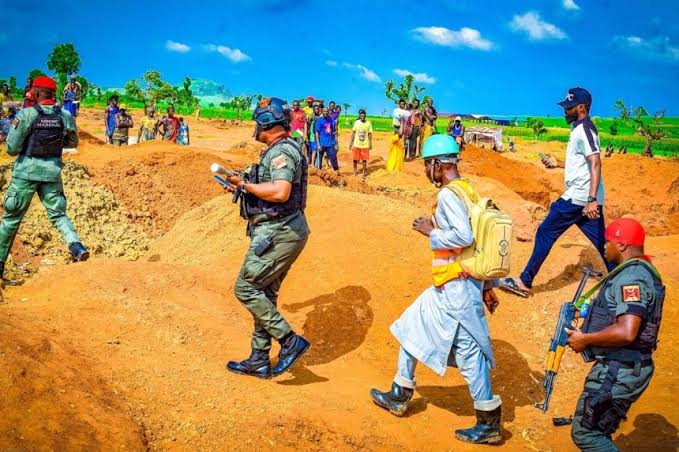
Speakers said armed groups are increasingly taking over resource-rich communities, financing their activities through illegal mining and exploiting weak governance to expand their control.
Environmental activist, Nnimmo Bassey said forests devastated by logging and mining have become safe havens for bandits and terrorists instead of wildlife.
“Some forests have become habitats not for wildlife but for wild humans, bandits and terrorists, who disconnect communities from their forests and sometimes turn the territories into exclusive islands of criminal fiefdoms,” he said.
Bassey who is the Executive Director, Health of Mother Earth Foundation, HOMEF, warned that environmental destruction is no longer only an ecological issue but a major driver of insecurity because it destroys livelihoods, contaminates water sources, degrades farmland and forces communities from their ancestral homes.
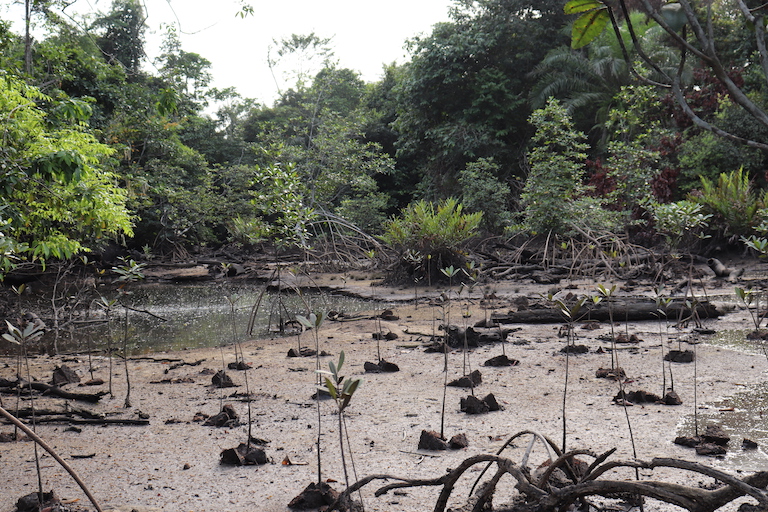
He said Nigeria loses between 250,000 and 300,000 hectares of forest every year, warning that if the trend continues, the country could lose its remaining forests by 2052.
Bassey also cautioned against celebrating new discoveries of strategic minerals such as lithium, gold and rare earth elements without first establishing strong governance systems to protect host communities from exploitation.
Chairman of the occasion and Emir of Nasarawa, Ibrahim Usman-Jibril, said banditry and insurgency have evolved into profitable criminal enterprises driven largely by the illegal exploitation of natural resources.
According to the monarch, armed groups seize control of mineral-rich communities, displace residents and finance their operations through illegal mining and timber harvesting, while weak regulation and corruption allow the syndicates to flourish.
He alleged that influential local actors, politicians and foreign interests use armed groups to protect illegal mining operations and prevent regulators from accessing affected areas.
Drawing on Nasarawa State’s experience as one of Nigeria’s major mineral-producing states, the Emir said the country’s natural resources should drive development instead of deepening poverty, environmental destruction and violent conflict.
The Chairman of the Bayelsa State Traditional Rulers Council, His Royal Majesty King Bubaraye Dakolo, said environmental degradation and insecurity are reinforcing each other across the country.
He linked violent displacement in parts of northern Nigeria to illegal mining, saying armed groups have forced entire communities off their ancestral lands to gain access to valuable minerals, including gold, lithium and uranium.
Dakolo said many of those displaced have fled to southern states, warning that insecurity in one part of Nigeria inevitably affects the entire country.
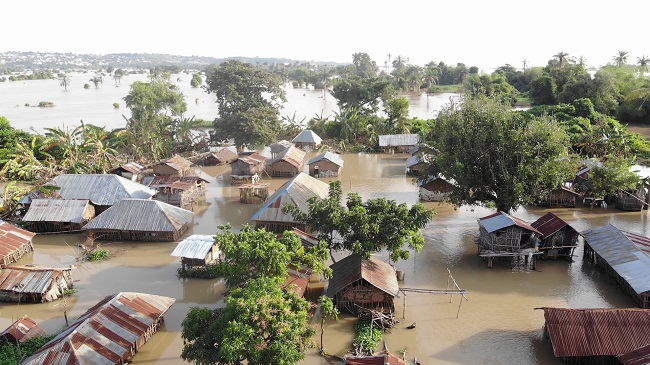
The monarch also criticised decades of environmental neglect, citing the devastating 2022 floods that nearly claimed the lives of his family.
He argued that poor river management, oil exploitation and weak environmental governance have worsened flooding across Nigeria.
He further lamented that many oil-producing communities in the Niger Delta pay up to three times more for petroleum products than residents of other parts of the country despite hosting oil and gas facilities.
Former House of Representatives member Dr Abdul Oroh, also warned that Nigeria is fighting a resource-driven conflict sustained by illegal mining networks.
He said criminal groups, backed by powerful local and international interests, are exploiting Nigeria’s vast mineral wealth while communities lose their forests, farms and livelihoods.
Oroh questioned how trucks transporting illegally mined minerals move freely across major highways despite widespread insecurity, suggesting that influential interests benefit from the illicit trade.
Comparing Nigeria’s situation with the Democratic Republic of Congo, he warned that competition over mineral resources could prolong instability unless communities are empowered to protect their environment and the country reasserts control over its natural resources.
He added that Nigeria’s insecurity poses a growing threat to peace and stability across West Africa.
Participants at the convergence called on the Federal Government to strengthen environmental governance, enforce mining regulations, protect community land rights and support indigenous forest management.
They argued that community-led conservation remains the country’s most effective defence against environmental degradation and resource-driven conflict.