By Chinedu Echianu
The Nigeria Labour Congress (NLC) has given the Federal Government a two-week ultimatum to reduce petrol prices, commence renegotiation of the national minimum wage and implement outstanding agreements with health and public sector workers.
The ultimatum, which takes effect from Friday, October 9, 2026, also covers the implementation of the Terms of Settlement reached with the Joint Health Sector Unions and Assembly of Healthcare Professionals (JOHESU) on February 5, 2026, as well as the demands of the Joint Public Sector Negotiating Council (JPSNC).
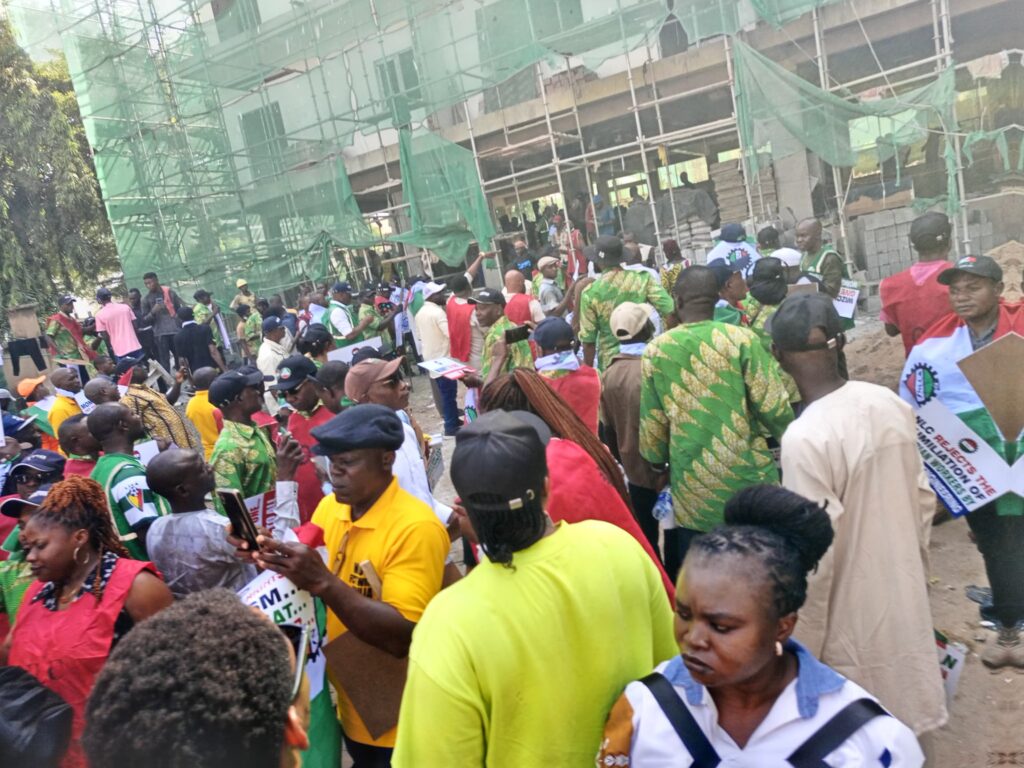
The NLC announced the ultimatum in a communiqué issued after a joint meeting of its National Executive Council (NEC) and Central Working Committee (CWC) held in Abuja.
In the communiqué signed by the NLC President, Comrade Joe Ajaero, the Congress warned that failure to meet the demands within the stipulated period would compel it to take further action, as directed by its relevant organs.
The labour centre is demanding that petrol prices be reduced to the levels prevailing when the current national minimum wage was signed into law in 2024, arguing that the high cost of fuel has pushed up transportation costs, food prices and the cost of other essential goods.
The Congress also called on the government to begin negotiations for a new national minimum wage before the end of October, insisting that the current wage has lost its purchasing power amid rising inflation and the depreciation of the naira.
According to the NLC, workers can no longer afford basic necessities, including food, housing, healthcare, transportation and education, on their present earnings.
The labour centre further demanded the implementation of previously agreed tax relief for workers and the immediate payment of wage awards to cushion the impact of the rising cost of living.
It said workers should not be expected to bear the burden of prevailing economic challenges without corresponding measures to ease their hardship.
The Congress expressed concern over the worsening economic conditions facing Nigerian workers and the wider population, citing persistent inflation, currency depreciation and the rising cost of essential goods and services.
It blamed the situation on the Federal Government’s economic policies, which it said had intensified hardship among workers and low-income households.
The NLC called on its affiliate unions and progressive allies to remain on alert and prepare for possible industrial action against policies it considers harmful to workers and the general population.