By Halima Adisa
The Independent National Electoral Commission (INEC) has established a specialised artificial intelligence (AI) unit to monitor digital threats and tackle deepfakes ahead of Nigeria’s 2027 general elections.
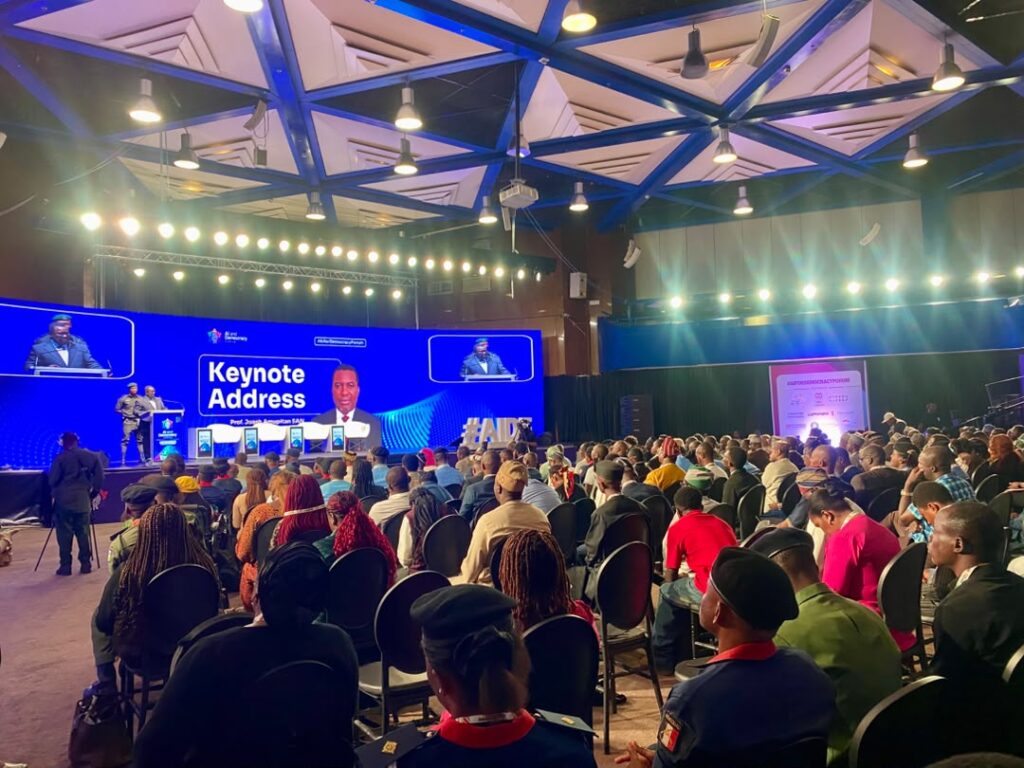
INEC Chairman, Professor Joash Amupitan, disclosed this on Wednesday at the AI and Democracy Forum 2026, organised by Yiaga Africa and partners in Abuja.
Amupitan warned that AI-generated videos, audio recordings and images could mislead voters, distort public debate and undermine confidence in the electoral process.
“The greatest threat we face today as we go into this election is not hacking of ballot boxes, but the hacking of voters’ minds,” he said.
The forum, themed “Safeguarding Nigeria’s 2027 General Election in the Age of Artificial Intelligence,” brought together electoral officials, technology companies, security agencies, civil society organisations and media practitioners to examine AI’s implications for electoral integrity.
The INEC chairman said the commission is developing a governance framework to guide the use of AI in election administration, with emphasis on transparency, accountability and human oversight.
He stressed that critical electoral decisions, including voter accreditation, results collation and candidate qualification, would not be left entirely to autonomous systems.
“Algorithms will not, and must never, decide the 2027 vote,” he said, stating that the choice of who governs Nigeria rests with the electorate.
He disclosed that the INEC Candidates Nomination Portal had processed more than 15,000 nominations across 22 political parties, while the commission had completed 10 of the 14 major operational milestones stipulated by the Electoral Act 2026.
The chairman said the 2027 general election would involve more than 103 million registered voters and 176,846 polling units across 774 local government areas, making the protection of electoral information and digital infrastructure a major concern.
Prof Amupitan proposed an Electoral Information Integrity Coalition involving INEC, civil society groups, media organisations, fact-checkers and telecommunications operators to identify and counter AI-generated falsehoods.
Executive Director of Yiaga Africa, Samson Itodo, said rebuilding public trust would be central to the credibility of the 2027 elections.
Itodo urged organisations developing AI-powered platforms to aggregate election results to ensure their methods were transparent, accurate and open to independent scrutiny.
Microsoft’s Senior Director of Global Elections, Dave Leichtman, described AI as both a tool and a potential weapon, arguing that its benefits could be harnessed while reducing the risks of misuse.
Assistant Commissioner of Police Oluwaseyi Olabisi Okuwobi, representing the Nigeria Police Force National Cybercrime Centre, said the centre used specialised tools to detect suspected synthetic media and monitored online activity through its intelligence and open-source intelligence units.
The forum highlighted the need for collaboration among electoral umpires, political parties, technology companies, security agencies, the media and citizens to protect the integrity of the elections.
Edited by Julian Osamoto