By Oluwakemi Kindness
Nigeria needs an estimated $337 billion between 2026 and 2035 to meet its climate targets, prompting the Federal Government to urge States, ministries, departments and agencies (MDAs) to integrate climate action into their policies, budgets and development plans.
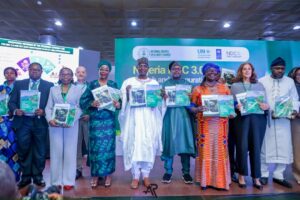
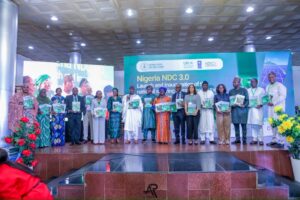
The Director-General of the National Council on Climate Change, (NCCC) Omotenioye Majekodunmi, disclosed this on Thursday in Abuja, at the launch of Nigeria’s Third Nationally Determined Contribution (NDC 3.0), Net Zero Investment Plan and Long-Term Low-Emissions Development Strategy.
Majekodunmi disclosed that the country would require $195 billion for emissions reduction and $141.5 billion for climate adaptation.
“NDC 3.0 targets a 32 per cent reduction in emissions by 2035, using 2018 as the baseline, as Nigeria pursues net-zero emissions by 2060”.
She explained that Nigeria would need credible investment plans, concessional financing, effective public finance management and private-sector investment to achieve the targets.
Representing the Secretary to the Government of the Federation, SGF, George Akume, his Senior Technical Adviser, Prof. Babatunde Benard, noted that climate action required coordinated efforts across government institutions and could not be left to environmental agencies alone.
Akume urged MDAs to set clear implementation targets and ensure accountability while government institutions take responsibility for implementing the country’s climate commitments..
He also highlighted the role of state governments in agriculture, transportation, urban development, waste management and community resilience.
Meanwhile, the United Nations Development Programme, UNDP, Resident Representative in Nigeria, Ms Elsie G. Attafuah, identified poor project preparation, weak business models and unsuitable financing arrangements as major obstacles to climate investment.
Attafuah said some climate initiatives struggled to attract funding because they lacked feasibility studies, credible business models and appropriate financing instruments.
She urged stakeholders to ensure that climate financing reached vulnerable communities, noting that public and concessional funding remained important for adaptation and essential services that might not generate direct financial returns.
Contributing, the Federal Ministry of Livestock Development pledged to work with government institutions, state governments and development partners to build a sustainable, climate-resilient livestock sector.
Meanwhile, the government also inaugurated an Interministerial Steering Committee to coordinate climate action across government institutions, align climate measures with national and sectoral budgets, mobilise financing and monitor implementation.