By Mardiyyah Abubakar
President Bola Tinubu has ordered the redesign and reconstruction of the 136-kilometre Benin-Asaba Road into a dual carriageway following the Federal Government’s decision to reclaim the highway from its concession arrangement.
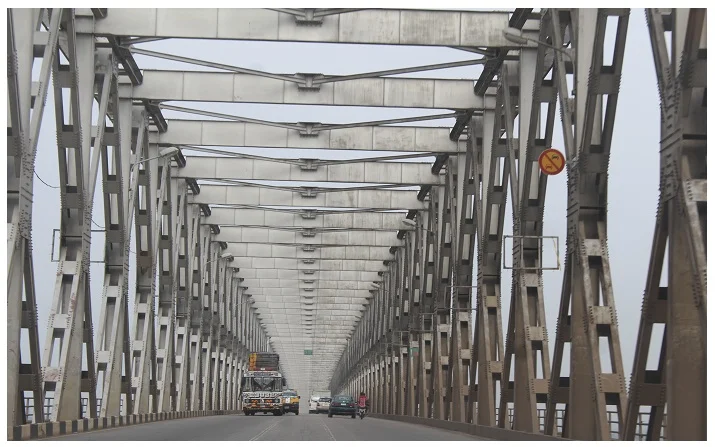
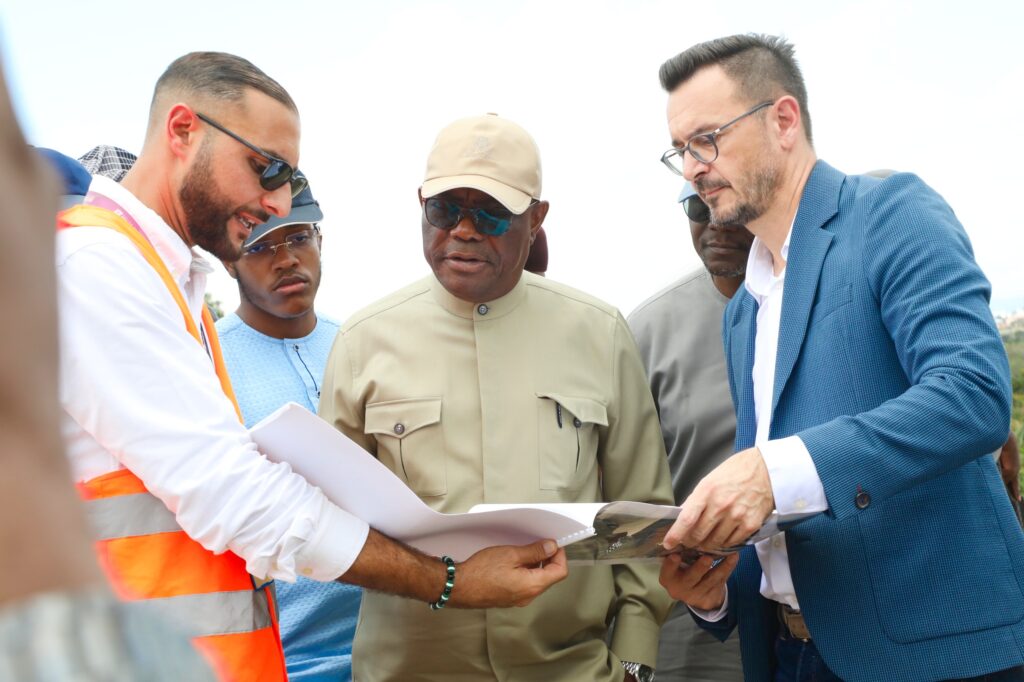
The Minister of Works, David Umahi, disclosed this during the reopening of the First Niger Bridge on the Asaba-Onitsha Road, explaining that the Federal Ministry of Works would now take direct responsibility for the highway’s reconstruction.
Umahi said permanent reinforced concrete pavement works would begin on critical sections while the comprehensive redesign of the road continues.
“The legacy of President Bola Tinubu, you will see it ongoing on this road. Never again will our people suffer on this road,” the minister said.
The highway was previously concessioned under the Federal Government’s Highway Development and Management Initiative, designed to attract private investment into road infrastructure.
However, the arrangement encountered challenges over construction quality and the pace of work. During inspections in August 2026, Umahi criticised the concessionaire for slow progress, inadequate technical capacity and substandard construction.
He said efforts to negotiate an intervention failed after the concessionaire rejected proposed options and did not allow emergency repairs.
FG Strengthens Security on First Niger Bridge
Umahi also announced measures to improve security and complete outstanding rehabilitation works on the First Niger Bridge following reports that individuals had removed bolts and cut metal components from its steel structure.
The minister said the Federal Ministry of Works inspected the bridge after a content creator raised concerns about activities that could threaten its structural integrity.
Commissioned in 1966 by Nigeria’s then Prime Minister, Sir Abubakar Tafawa Balewa, the bridge has undergone rehabilitation, including asphalt resurfacing and median demarcation.
To strengthen surveillance, the government has installed closed-circuit television cameras, solar-powered lights and observation centres at both ends of the bridge.
Three turnaround passages have also been created to help motorists manoeuvre safely when vehicles break down.
Umahi said outstanding works include repainting the steel structure, treating rust-affected areas, installing additional surveillance cameras and providing canopies at both ends.
He warned against illegal sand dredging within a 10-kilometre radius of bridges and directed federal works officials in Delta and Anambra states to report any failure by security agencies to enforce the restriction.
Tinubu Approves Major Road Projects
Beyond the Benin-Asaba corridor, Umahi said Tinubu had directed the reconstruction of about 400 kilometres of the East-West Road, a major transport route connecting communities across the Niger Delta.
The minister also reaffirmed the administration’s commitment to completing the 750-kilometre Lagos-Calabar Coastal Highway, dismissing reports that construction had stopped.
According to him, work is ongoing, while construction on outstanding sections in Bayelsa and Cross River states is expected to begin in the coming weeks.
He added that designs for the first and second sections of the East-West Road were nearing completion.
On the Enugu-Port Harcourt corridor, Umahi said reconstruction was about 90 per cent complete, while contractors were working on a 44-kilometre section in Port Harcourt using reinforced concrete pavement.
In Anambra State, contractors have completed 33 kilometres of a 107-kilometre dual carriageway project, with work on a further 40-kilometre section from the First Niger Bridge axis expected to begin within two weeks.
Umahi also highlighted the ongoing construction of Section 2B of the Second Niger Bridge bypass, a 17.5-kilometre project valued at ₦172 billion.
Defending the use of reinforced concrete on selected highways, the minister said the material would provide greater durability and reduce the frequency of road repairs.
He further defended the Federal Government’s economic reforms, describing them as difficult but necessary measures to avert a deeper crisis and support economic recovery.
Umahi urged critics to offer practical alternatives to the administration’s policies and assess the reforms against economic indicators and their impact on Nigerians.